
ENDE
Industrial-grade TPU tube patches, tire liners, and pneumatic hoses engineered for high pressure resistance, low thermal expansion, and compliance with Japanese Industrial Standards (JIS).
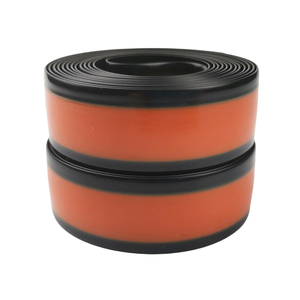
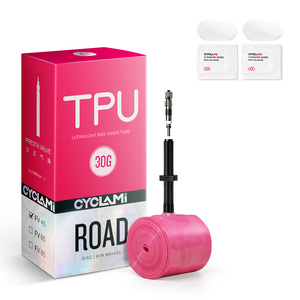
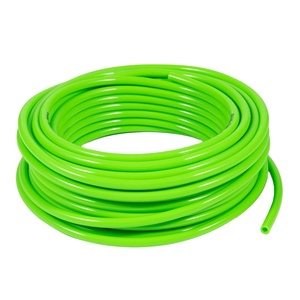
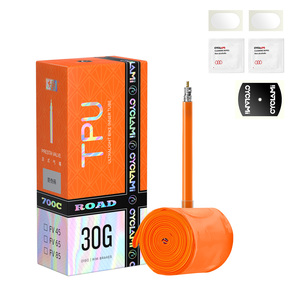
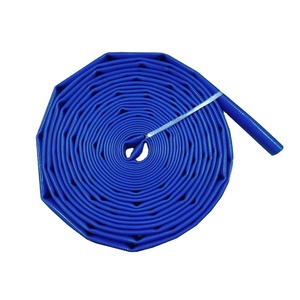
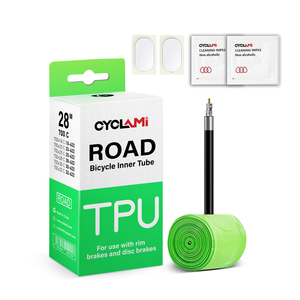
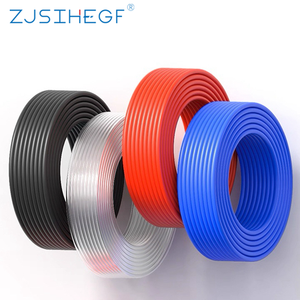
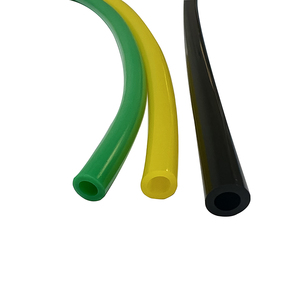
Japan’s pneumatic and micro-mobility infrastructure represents one of the world's most demanding procurement landscapes. From high-frequency commercial e-bike delivery networks across Greater Tokyo and the Kansai region to high-precision automotive automation assembly lines in Aichi Prefecture, the requirement for zero-defect repair systems and ultra-reliable thermoplastic polyurethane (TPU) tubes has never been more critical. As a global tube patches supplier and specialized exporter to the Japanese market, our engineering framework integrates modern polymer physics with strict Japanese Industrial Standards (JIS K 6301 and JIS D 9419).
Traditional butyl rubber patching relied heavily on vulcanizing solvents containing high levels of Volatile Organic Compounds (VOCs). Under Japan's stringent Industrial Safety and Health Act (ISHA) and Ministry of Environment directives, commercial fleet operators and bicycle distributors are rapidly transitioning toward zero-solvent TPU patch kits and cold-press adhesive membrane technologies. TPU patches offer superior molecular cross-linking, allowing seamless integration with both conventional butyl bladders and modern ultra-lightweight TPU inner tubes.
Key Sourcing Insight for Japanese Importers: Polymer elasticity retention at sub-zero temperatures (down to -25°C in Hokkaido winters) requires specialized ester-based and ether-based TPU formulations. Standard rubber patches suffer from micro-fracturing under cyclic pressure fluctuations, whereas engineered TPU patches retain structural memory and airtight sealing across extreme thermal gradients.
Furthermore, Japanese urban commuting has witnessed an unprecedented surge in utility bicycles (Mamachari) equipped with electric assist motors. These heavy-duty e-bikes exert up to 40% higher torque and rotational force on tire structures, making standard vulcanized repairs prone to friction shear. Our reinforced dual-color TPU webbing patches and tire liners effectively dissipate heat spikes caused by sustained mechanical braking in hilly topographies like Yokohama and Nagasaki, offering enterprise buyers an unmatched risk-mitigation profile.
Tailored engineering deployments serving specialized Japanese transport networks, manufacturing hubs, and outdoor sports sectors.
Last-mile delivery fleets operating on electric cargo bikes require instantaneous puncture sealing. Our glueless TPU patch kits enable roadside repair in under 3 minutes without chemical drying delays, preserving delivery SLA metrics.
Standard rubber patches lose elasticity and delaminate under freezing alpine conditions. Our cold-resistant TPU patch matrix maintains flexible elongation down to -30°C, providing essential safety for mountain biking and winter commuting.
Pneumatic assembly tools and robotic air feeds utilize our ester-based PUR TPU hoses. High kink resistance and burst threshold protection guarantee zero unplanned downtime in continuous 24/7 industrial environments.
Quantitative analysis based on Japanese Industrial Standards (JIS K 6251 tensile testing protocols).
| Technical Property | Traditional Butyl Cold Patch | Advanced TPU Elastomer Patch | B2B Advantage for Japanese Market |
|---|---|---|---|
| Tensile Strength (MPa) | 12 - 16 MPa | 45 - 55 MPa | 3.5x Structural Durability |
| VOC Emission Level | High Solvent Content (Toluene/Xylene) | 0% VOC Solvent-Free Adhesive | ISHA Environmental Compliance |
| Air Retention (Bar Loss / 30 Days) | 1.2 Bar Loss | < 0.2 Bar Loss | Superior Gas Barrier |
| Thermal Tolerance Range | -10°C to +50°C | -35°C to +85°C | Hokkaido / Okinawa All-Weather |
| Weight per Patch (Grams) | 4.5g - 6.0g | 0.8g - 1.2g | 78% Weight Reduction |
The Japanese procurement landscape demands complete traceability, standardized quality metrics, and environmentally sustainable packaging. Japanese bike retail chains (such as Y's Road, Cycle Base Asahi) and OEM industrial buyers evaluate foreign exporters based on four distinct technical pillars:
1. JIS D 9419 Compliance & Dimensional Stability: Bicycle inner tubes and repair systems exported to Japan must undergo rigorous cyclic pressure testing. Our TPU patch kits and ultralight inner tubes feature custom valve stems crafted from high-precision aluminum and thermoplastic polymers, eliminating valve stem shear—a common defect in inferior rubber products.
2. Micro-Mobility Explosion & High-Pressure Performance: The widespread adoption of gravel bikes, road racing setups, and e-bikes in urban centers like Nagoya and Fukuoka has driven demand for high-pressure patching solutions. Traditional rubber patches create structural bulges under high inflation (above 80 PSI), altering tire roundness. Our ultra-thin (0.1mm - 0.2mm) TPU repair films maintain a perfectly uniform tire profile.
3. Private-Label OEM Branding & Kanji/Kana Packaging: To successfully penetrate Japanese retail networks, exporters must provide flexible OEM/ODM packaging customization. We supply enterprise buyers with customized blister cards, compact aluminum tin cases, and bilingual instructional manuals complying with the Consumer Product Information Act of Japan.
4. 9-Digit Batch Code Traceability: Reflecting Japanese Quality Management (5S / Kaizen) standards, every production batch of our TPU patch kits and pneumatic tubing carries a laser-etched batch code and 9-digit product ID. This enables total lot-level traceability from raw monomer resin synthesis to final containerized shipment into Tokyo or Yokohama ports.
Comprehensive guidance regarding customs compliance, minimum order quantities, and technical compatibility.
Tube patches and polyurethane repair kits are generally classified under HS Code 4016.99 (Articles of vulcanized rubber) or HS Code 3926.90 (Articles of plastics/TPU). For seamless customs clearance at Tokyo or Yokohama ports, we provide a full Documentation Package including: Certificate of Origin (COO), Commercial Invoice with itemized HS codes, Safety Data Sheets (SDS) in accordance with Japanese GHS standards, and JIS Compliance Certificates.
Yes. Our advanced TPU patch systems utilize a specialized elastomeric adhesive matrix that creates a dual molecular bond. It effectively bonds to both non-polar butyl rubber substrates and polar thermoplastic polyurethane (TPU) surfaces. This versatility allows Japanese distributors to stock a single patch inventory for all tube types.
Standard rubber cement degrades quickly in humid climates like Tokyo’s summer season. Our glueless TPU patches and sealed adhesive films are moisture-resistant and hydro-stable. Stored in original airtight packaging, they offer a certified shelf life of 36 months without adhesive oxidation or loss of tackiness.
For standard unbranded bulk orders, our MOQ starts at 500 units. For fully customized private-label packaging (including custom artwork, Japanese language instruction inserts, and custom tin/plastic container branding), our OEM MOQ is typically 2,000 units per SKU, with rapid lead times of 15-20 business days.
Our premium TPU formulations are engineered with a high softening point exceeding 130°C. While ultralight S-TUBO models are optimized for disc-brake systems, our standard Tubo-Road and repair patches are fully certified for rim-brake usage, passing stringent heat dissipation tests under long mountain descents.
Partner with a trusted global supplier of TPU tube patches, tire liners, and industrial polyurethane hoses. Download our engineering specifications and schedule a consultation with our export specialists today.
Get Catalog