
Technical White Paper: Spare Tube Manufacturing & B2B Supply Chain Landscape in Vietnam
As Vietnam solidifies its position as a primary global powerhouse for light electric vehicle (LEV) assembly, bicycle manufacturing, and industrial automation, the demand for high-reliability components—specifically spare tubes, pneumatic hoses, and elastomeric fluid transfer conduits—has reached unprecedented levels. Modern industrial buyers, original equipment manufacturers (OEMs), and tier-1 brand distributors are rapidly transitioning from legacy vulcanized rubber products toward engineered Thermoplastic Polyurethane (TPU) solutions.
This industry report examines the technical parameters, localized environmental challenges, market trends, and manufacturing advantages of sourcing premium TPU spare tubes and hoses within the Vietnamese industrial ecosystem, offering actionable insights for procurement officers, system integrators, and retail brand managers.
1. Material Science Shift: Why Thermoplastic Polyurethane (TPU) Outperforms Butyl in Vietnam
For decades, synthetic butyl rubber served as the baseline material for pneumatic inner tubes and fluid transfer hoses. However, under Vietnam's specific climate conditions—characterized by relative humidity levels frequently exceeding 85%, prolonged monsoon seasons, high ambient ozone concentration, and intense road surface heat—butyl rubber exhibits significant inherent vulnerabilities:
- Hydrolytic & Oxidative Degradation: Vulcanized rubber polymers experience cross-link breakdown when exposed to heat and moisture over 12–18 months, leading to micro-fissures, porosity, and pressure loss.
- Rotational Mass & Weight Disadvantage: Standard butyl road tubes weigh approximately 100g to 130g, creating substantial rotating inertia at the wheel rim that reduces pedal efficiency and acceleration response.
- Bulk Volume Logistics: Traditional rubber tubes require excessive cargo volume during oceanic shipping and warehouse storage, driving up landed supply chain costs per unit.
In contrast, molecularly structured Thermoplastic Polyurethane (TPU) features dense linear block copolymer chains containing alternating hard and soft segments. This chemical architecture delivers exceptional mechanical performance:
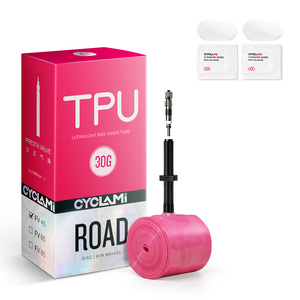
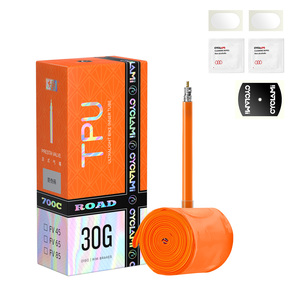
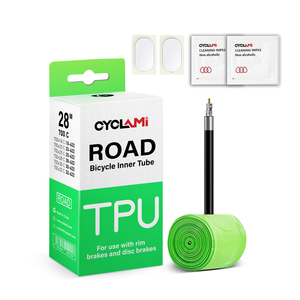
- Massive Weight Reduction: Ultra-thin TPU wall profiles (down to 0.15mm) yield finished tube weights as low as 23g–30g for 700C road bike tires—a weight reduction of up to 75% compared to standard butyl.
- Superior Tensile Strength & Puncture Resistance: TPU exhibits twice the puncture resistance force (measured in Newtons via needle penetration tests) compared to butyl walls of double the thickness, effectively preventing snakebite pinches and thorn punctures.
- Chemical & Environmental Inertness: TPU possesses natural resistance to UV radiation, oil, grease, hydrolytic breakdown, and ozone degradation, ensuring a shelf life exceeding 5 years without mechanical property loss.
| Performance Metric | Standard Vulcanized Butyl | Engineered TPU (Tubolito Standard) | Information Gain & Advantage |
|---|---|---|---|
| Average Weight (700C Road) | 100g – 120g | 23g – 38g | Reduces wheel rotating mass by ~75%; improves kinetic acceleration. |
| Puncture Force Resistance (N) | 12.5 N | 26.8 N | More than 2× resistance against sharp thorns, glass, and pinch flats. |
| Packed Storage Volume | 100% baseline volume | ~25% baseline volume | Saves 75% container freight space & retail shelf footprints. |
| Air Retention (Drop per month) | ~1.5 to 2.0 PSI/week | <0.8 PSI/week | Dense polymer grid minimizes gas diffusion through tube walls. |
| Thermal Stability Limit | Degrades rapidly at >70°C | Stable up to >110°C | Prevents sudden heat-induced rim blowouts during prolonged downhill braking. |
| Recyclability & Circularity | Non-recyclable crosslinked rubber | 100% Melt-Recyclable Elastomer | Aligns with EU Green Deal & ESG procurement frameworks in VN factories. |
Localized Application Scenarios in the Vietnam Market
Vietnam’s diverse geography and rapidly expanding industrial sectors create distinct operational demands for spare tubes and elastomeric tubing products:
A. Urban Micro-Mobility & E-Bike Commuting (Ho Chi Minh City & Hanoi)
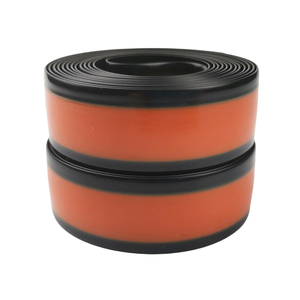
With high-density traffic congestion in major metropolitan areas, e-mobility, urban commuter bikes, and last-mile delivery fleets (such as Grab, ShopeeFood, and Be drivers) operate continuously under heavy payload conditions. Frequent roadside punctures from construction debris cause operational downtime. TPU inner tubes and reinforced dual-layer puncture straps provide essential protection, ensuring delivery fleets remain operational while reducing maintenance cycles for fleet operators.
B. Export-Grade Bicycle OEM & ODM Assembly (Binh Duong & Dong Nai Clusters)
Industrial parks in Southern Vietnam host major international bicycle manufacturing plants exporting completed road, gravel, and e-bikes to North American and European markets. Sourcing lightweight, compact TPU spare tubes allows assembly lines to meet stringent strict export weight targets (e.g., sub-8kg road specs or sub-18kg e-bike limits) while drastically lowering import shipping tariffs and volume logistics costs.
C. High-Altitude Off-Road & Eco-Tourism Trails (Tay Bac, Sapa & Da Lat)
Mountain biking and gravel adventure tourism in northern alpine regions (Sapa, Ha Giang) and central highlands (Da Lat) demand tube components that withstand extreme terrain. High impact forces, sharp limestone rocks, and prolonged rim friction generate severe thermal loads. TPU’s high thermal tolerance and superior elasticity prevent pinch flats and tube deformation during high-speed technical descents.
D. Industrial Automation & Agricultural Water Conveyance (Mekong Delta & Red River Delta)
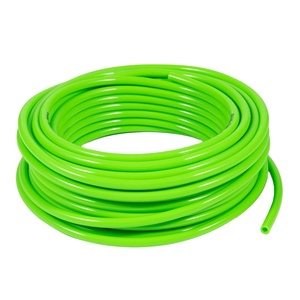
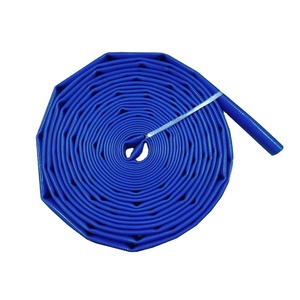
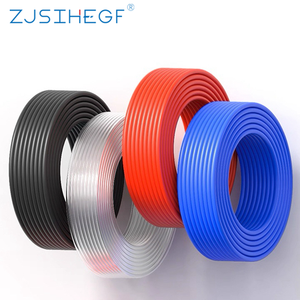
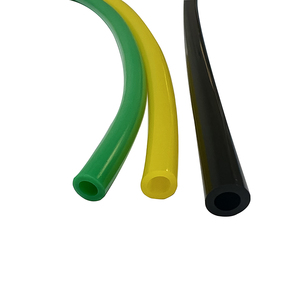
Beyond cycling, industrial-grade polyurethane tubing (such as Ester-based PUR hoses and TPU well-riser water pipes) serves vital roles in automated pneumatic machinery within Vietnamese electronics plants (Samsung, Foxconn facilities) as well as potable water transfer in agricultural aquacultures across the Mekong Delta region. Resistance to abrasion, oil, and continuous flexing makes TPU hoses the material of choice over PVC.
Local Market Trends & Supply Chain Dynamics in Vietnam (2025–2030)
Several macro-economic and industrial shifts are shaping the spare tube manufacturing and distribution ecosystem in Vietnam:
- Decoupling & Sourcing Diversification: Global brands are shifting procurement strategies toward Vietnamese suppliers to build resilient, regionalized supply chains. Sourcing high-quality TPU tubes manufactured under strict quality standards ensures compliance with international trade agreements (such as EVFTA and CPTPP).
- Strict Sustainability & Carbon Footprint Audits: European and North American importers require audited Scope 3 carbon reduction metrics. Thermoplastic polyurethane is 100% recyclable via thermal re-melting processes, unlike thermoset rubber which ends up in landfills. This circular material capability allows Vietnamese OEM exporters to meet carbon-neutral compliance mandates.
- Rise of Smart Sensing Components: Modern cycling and industrial applications increasingly feature integrated IoT telemetry. Products such as Tubo-PSENS introduce embedded NFC sensor technology inside TPU tube structures, enabling mechanics and riders to read real-time pressure via smartphone applications without physical pressure gauges.
Enterprise Engineering & Manufacturing Advantages
Partnering with our specialized TPU spare tube manufacturing network provides business customers in Vietnam with distinct operational advantages:
- Precision Austrian & European Engineering Heritage: Advanced automated high-frequency welding techniques eliminate weak joint seams, delivering uniform wall thickness and reliable airtight performance around the valve stem junction.
- Comprehensive Batch Traceability System: Every manufactured tube is laser-etched with a unique 9-digit product code and 5-digit manufacturing batch identifier. This enables full quality control audit capabilities for quality control teams across global distribution networks.
- Custom OEM/ODM Specifications: We offer tailored customization of tube dimensions (16" folding bike sizes up to 29" MTB Plus), valve lengths (45mm, 65mm, 85mm Presta or Schrader), custom wall thicknesses, and specialized dual-color TPU webbing liners.
- Low-Volume Prototype to High-Volume Production Capabilities: Our flexible manufacturing facilities support both specialized small-batch runs for custom bike builders and high-volume containerized shipments for OEM factory assembly lines.