
ENDE
Explore our industrial-grade polyurethane tubing, lightweight cycling inner tubes, and high-pressure fluid transfer pipes tailored for Nagoya’s manufacturing sector.
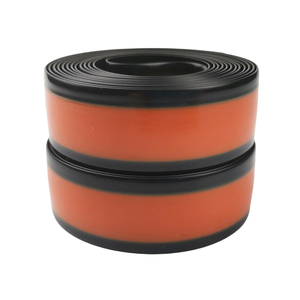
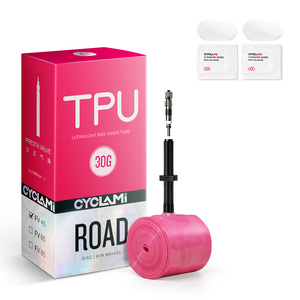
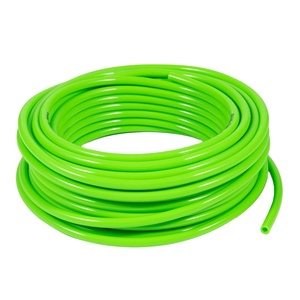
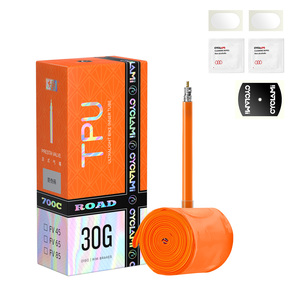
As the economic epicenter of Japan’s Chubu region, Nagoya and the surrounding Aichi Prefecture represent one of the world's most sophisticated manufacturing hubs. Home to automotive titans, aerospace engineering facilities, robotics pioneers, and extensive logistic infrastructure surrounding Nagoya Port (Meiko), the regional requirement for high-performance elastomer tubing is non-negotiable. Whether engineering high-frequency pneumatic air lines for automated robotic assembly cells in Toyota City or supplying ultra-lightweight thermoplastic polyurethane (TPU) bicycle inner tubes for Nagoya’s dense urban commuting and leisure cycling sectors, procuring precision-engineered spare tubes from qualified direct manufacturers is paramount to operational resilience.
This industry whitepaper explores the material physics, manufacturing innovation, and local application vectors of Thermoplastic Polyurethane (TPU) and specialized elastomer hoses. By analyzing empirical performance data, dynamic mechanical behavior, and environmental compliance frameworks (including EU-RoHS, REACH, and JIS Japanese Industrial Standards), this document serves as a technical procurement roadmap for B2B buyers, OEM system integrators, and commercial distributors throughout Nagoya.
Information Gain Insight: Unlike standard rubber or conventional vulcanized butyl inner tubes that degrade rapidly under cyclical mechanical stress and environmental exposure, advanced Thermoplastic Polyurethane (TPU) provides up to twice the tensile puncture resistance while reducing component mass by up to 75%. In industrial automation, TPU’s superior flexural fatigue resistance eliminates costly micro-leaks in 24/7 pneumatic lines.
Polyurethane polymer technology bridges the structural gap between flexible rubber and rigid plastics. In demanding industrial and athletic applications across Nagoya, selecting the correct chemical formulation—specifically ester-based versus ether-based TPU—determines long-term field reliability.
| Performance Metric | Ester-Based TPU Tubing | Ether-Based TPU Tubing | Conventional Butyl Rubber | }
|---|---|---|---|
| Tensile Strength (MPa) | 45 - 65 MPa | 35 - 50 MPa | 8 - 15 MPa |
| Abrasion Resistance (Loss mm³) | 20 - 35 mm³ (Ultra-Low) | 35 - 50 mm³ | 120 - 200 mm³ |
| Hydrolysis & Microbial Resistance | Moderate (Dry pneumatic use) | Outstanding (Fluid/Water transfer) | Moderate |
| Kink Recovery & Elasticity | Immediate structural memory | High flexural endurance | Permanent deformation risk |
| Mass Density (g/cm³) | 1.18 - 1.22 g/cm³ | 1.12 - 1.16 g/cm³ | 1.30 - 1.50 g/cm³ |
For high-pressure pneumatic automation in Aichi’s manufacturing plants, ester-based TPU tubing (such as our 4mm-16mm air compressor line series) offers superior mechanical strength and oil resistance. Conversely, for potable water transfer and food-grade fluid routing, ether-based transparent TPU tubing resists hydrolytic degradation and prevents microbial growth, adhering strict hygienic standards.
Tailored engineering solutions meeting the diverse demands of Nagoya’s industrial ecosystems and lifestyle infrastructure.
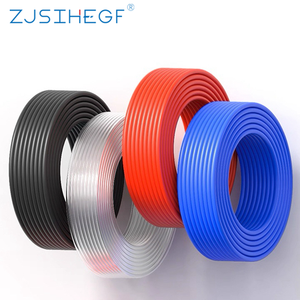
Pneumatic system efficiency relies on leak-free air lines. Our ester-based PUR air hoses (4mm to 16mm) withstand dynamic flexing on robotic arms, resisting continuous abrasion against cable tracks in Nagoya automotive plants.
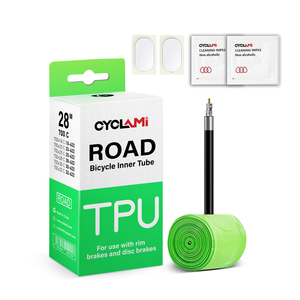
From daily commutes across Sakae to competitive road cycling toward Mount Ibuki, CYCLAMI ultralight 30g TPU inner tubes reduce rotational wheel weight by 75%. Reduced mass enables faster acceleration and effortless climbing.
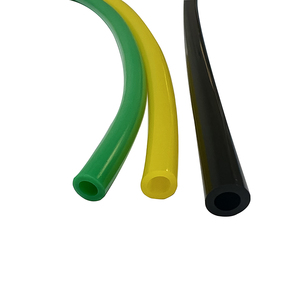
Transparent flexible TPU coil tubing provides safe, non-toxic, kink-resistant fluid transport. Certified for medical and food contact, these tubes allow visual monitoring of fluid lines without chemical leaching.
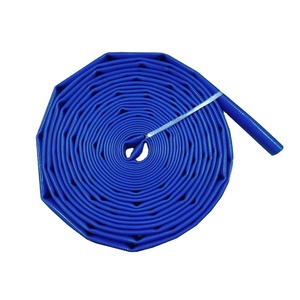
Heavy-duty ZYfire flexible TPU well riser hoses provide rapid-deployment potable water transfer lines during industrial municipal upgrades or emergency flood relief management across coastal Chubu regions.
The Chubu region is experiencing a systemic transformation driven by decarbonization targets, energy efficiency initiatives, and labor automation. As enterprise buyers in Nagoya re-evaluate their supply chains, two key macro-trends are driving the rapid adoption of Thermoplastic Polyurethane over traditional vulcanized rubber:
In both industrial machinery and cycling transportation, kinetic energy consumption correlates directly to mass. In automated production lines, lighter pneumatic lines reduce inertia on robotic actuators, extending servomotor lifespan and cutting electrical consumption. In cycling, replacing a standard 100g butyl inner tube with a 30g CYCLAMI TPU tube saves 140g of rotational mass per wheelset—delivering an immediate, perceptible performance gain valued highly by Japanese cyclists.
Unlike vulcanized rubber—which cannot be melted down and reprocessed due to irreversible chemical cross-linking—TPU is 100% thermoplastic. Waste material generated during extrusion or end-of-life replacement can be cleanly recycled and re-granulated into raw material feedstocks. For Nagoya enterprises striving for net-zero carbon footprints, integrating recyclable TPU spare tubes directly aligns with corporate ESG commitments.
As a specialized OEM/ODM manufacturer of premium spare tubes and technical polymer hoses, our organization operates under strict quality management systems (ISO 9001:2015 & ISO 14001:2015). We provide Nagoya business clients with distinct commercial and operational advantages:
Expert insights addressing key commercial, technical, and logistical queries for procurement teams in Japan.
TPU has a high melting point and exceptional thermal stability. However, for rim-brake road bikes subjected to prolonged downhill braking on steep mountain passes around Chubu, we recommend our standard Tubo-Road or disc-brake specific ultralight S-TUBO series. For disc-brake bikes, TPU tubes handle all thermal loads effortlessly while offering twice the puncture resistance.
Yes. Our ester-based PUR pneumatic tubing engineered for air compressors operates comfortably at working pressures up to 1.0 MPa (10 bar) at 20°C, with a burst pressure rating exceeding 3.0 MPa (30 bar). It fully complies with Japanese Industrial Standards (JIS B8381) for pneumatic fittings.
Conventional rubber patches and vulcanizing glues do not adhere to thermoplastic polyurethane. TPU tubes require dedicated alcohol-wipe prep and specialized TPU film patches. We supply wholesale TPU repair kits alongside tube shipments for bike shops, rental fleets, and municipal maintenance crews.
Absolutley. Our flexible transparent TPU hoses are fabricated from 100% virgin ether-based raw materials. They contain zero plasticizers, phthalates, or heavy metals, complying fully with FDA 21 CFR 177.2600 and EU Regulation No 10/2011 for food-contact plastics.
Standard OEM customized production runs take between 14 to 21 business days. Direct sea freight to Nagoya Port (Meiko) typically requires 5 to 7 days transit from our manufacturing plant, ensuring rapid turnarounds for distributor stock replenishment.
Yes. We offer complete OEM packaging design, private labeling, custom valve lengths (45mm, 65mm, 85mm), and color choices (brand orange, stealth black, clear) for commercial clients looking to launch branded products in Japan.
Looking for reliable pneumatic TPU tubing, high-tenacity industrial hoses, or market-leading ultralight cycling tubes for Nagoya and Japan distribution? Contact our engineering sales team today for custom quotes and product samples.