ENDE
The Indian electric two-wheeler ecosystem is undergoing an unprecedented structural transition. Accelerated by federal incentive programs such as the FAME (Faster Adoption and Manufacturing of Electric Vehicles) schemes, state-level EV mandates, and explosive demand across quick-commerce (Q-commerce) delivery networks like Zomato, Swiggy, Blinkit, and Zepto, India has emerged as one of the fastest-growing micro-mobility sectors globally. However, this massive scale introduces unique mechanical and environmental stresses on tire and inner tube components.
Unlike traditional human-powered bicycles, electric bikes (E-bikes), electric cargo trikes, and pedal-assist cycles (Pedelecs) subject their pneumatic systems to significantly higher torque outputs (ranging from 250W hub motors up to 750W mid-drive motors), heavier overall curb weights (battery packs + motor units adding 12–28 kg), and elevated dynamic braking loads. When operated on Indian urban and rural road topographies—characterized by high ambient temperatures exceeding 48°C during summer, monsoon potholes, unpaved gravel stretches, and pervasive sharp road debris—conventional butyl rubber inner tubes exhibit high failure rates due to thermal degradation, snakebite pinch flats, and rapid pressure loss.
For Indian OEMs, bike manufacturers, tier-1 assemblers, and commercial fleet managers, replacing failure-prone butyl inner tubes with advanced Thermoplastic Polyurethane (TPU) and reinforced elastomeric inner tubes represents a high-margin, low-warranty-claim engineering upgrade. This technical guide outlines the material advantages, OEM manufacturing capabilities, Indian localized application scenarios, and B2B sourcing frameworks necessary to secure high-performance inner tubes directly from specialized factory partners.
Indian asphalt road surfaces frequently exceed 65°C during summer peak hours. Continuous friction from hub-motor braking generates localized heat that softens standard butyl rubber, causing catastrophic valve stem shear. Engineered TPU maintains structural integrity up to 90°C without plasticizer migration.
TPU features an ultra-dense molecular polymer grid with a tensile strength exceeding 45 MPa (compared to ~12–15 MPa for standard butyl). This high elasticity resists penetration from thorn punctures, glass fragments, and high-impact rim pinches caused by Indian potholes.
TPU inner tubes pack down to approximately 25% of the volume of traditional butyl tubes. For Indian B2B importers ordering 20ft or 40ft HQ shipping containers to Nhava Sheva, Mundra, or Chennai ports, this translates to a 400% increase in unit density per shipment, drastically slashing landed freight cost per unit.
| Material Parameter | Standard Butyl Rubber Tube | Heavy-Duty E-Bike Butyl | Factory Premium TPU Tube | Webbing-Reinforced TPU |
|---|---|---|---|---|
| Material Density & Composition | Isobutylene-Isoprene (1.20 g/cm³) | Thickened Synthetic Rubber (1.35 g/cm³) | Thermoplastic Polyurethane (1.12 g/cm³) | Dual-Layer TPU + High-Tenacity Webbing |
| Average Weight (26" x 1.95-2.125) | ~190 g - 220 g | ~280 g - 350 g | ~45 g - 65 g | ~85 g - 110 g |
| Tensile Strength (MPa) | 10 - 14 MPa | 12 - 16 MPa | 42 - 50 MPa | > 65 MPa |
| Heat Deflection Limit | Softens at > 50°C | Softens at > 55°C | Stable up to 85°C | Stable up to 105°C |
| Puncture Force Threshold (N) | 18 - 25 N | 30 - 40 N | 75 - 95 N | > 130 N |
| Rotational Inertia Impact | Baseline (High Mass) | Increased Inertia (+40%) | Reduced Mass (-75%) | Reduced Mass (-55%) |
| Air Retention / Permeability | Requires reinflation weekly | Requires reinflation bi-weekly | Superior air retention (3-4 weeks) | Superior air retention (4+ weeks) |
Operational Challenges: Hyper-local delivery riders covering 80–140 km daily with total vehicle payloads exceeding 180 kg (rider + delivery box + dual battery packs). Downtime due to flat tires directly impairs rider earnings and fleet service-level agreements (SLAs).
Recommended Tube Solution: High-Tenacity Webbing-Reinforced TPU Inner Tubes (20" x 3.0 / 4.0 Fat Tire & 26" Heavy-Duty Specs). The anti-puncture webbing layer prevents nail and glass penetrations, ensuring near-zero roadside downtime for delivery fleets operated by Hero Lectro, Yulu, and Nexzu partners.
Operational Challenges: Ambient summer heat soaring up to 48°C with road contact surface temperatures climbing above 65°C. Rapid thermal expansion inside airtight tires often forces traditional vulcanized rubber seams to split, leading to sudden pressure dropouts.
Recommended Tube Solution: Ester-Based High-Heat TPU Tubes (700C / 27.5" x 1.75-2.10). Precision laser-welded seams combined with high glass-transition temperature polymer blends prevent seam bursting and preserve air pressure despite severe pavement heat.
Operational Challenges: Water-filled potholes masking sharp stone edges, gravel, and corroded metal debris. Wet conditions accelerate abrasive wear between the inner casing of the tire tire liner and the inner tube body.
Recommended Tube Solution: Double-Layer Anti-Abrasive TPU Inner Tubes with Co-Extruded Rim Strips. Smooth outer surface finish eliminates friction chaffing while high elongation at break (up to 450%) absorbs violent sharp impacts without tearing.
Operational Challenges: Steep incline riding requiring optimal motor battery efficiency. Excessive wheel weight increases motor power draw, reducing total range per single battery charge.
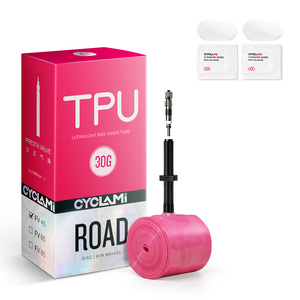
Recommended Tube Solution: 30g-45g Ultralight TPU Inner Tubes (27.5" & 29" E-MTB Specs). Shaving over 300 grams of rotational mass per wheel set allows electric mountain bikes to climb steeper gradients with reduced battery consumption, extending total range by 6–10%.
Our manufacturing facilities operate fully automated multi-layer TPU extrusion lines equipped with continuous laser-gauge wall thickness monitoring. Every inner tube produced undergoes stringent automated pressure testing and individual serial batch coding prior to export to the Indian market.
We support Indian importers with flexible MOQs, customized custom duty documentation (Form AI / India-ASEAN / COO certificate assistance), and localized logistics support directly to Indian ports.
The Indian micro-mobility market is projected to expand at a CAGR exceeding 15.2% over the next decade. Major industrial hubs in Punjab (Ludhiana), Maharashtra (Pune), Tamil Nadu (Chennai), and Haryana (Gurugram/Manesar) are rapidly transforming into global assembly bases for light electric vehicles. As Indian OEMs strive to achieve greater localized efficiency, components like tires and inner tubes are under intense scrutiny for quality upgrades.
1. Reduction of Total Cost of Ownership (TCO) for Commercial Fleets: Commercial fleet operators view tire repair costs and downtime as direct operational expenses. While the initial procurement cost of a TPU inner tube is higher than basic butyl rubber, its extended service life (lasting 3 to 4 times longer) and 80% reduction in flat tires yield a substantially lower TCO over 12,000 km of commercial operation.
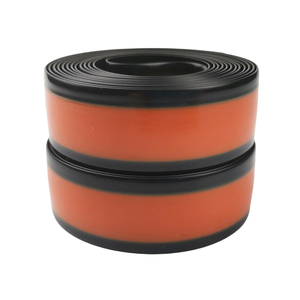
2. Compatibility with Tubeless & Standard Clincher Rim Systems: TPU inner tubes act as an ideal, compact solution for both traditional clincher setups and as ultralight emergency backup tubes for high-end tubeless E-bikes. Their compact volume allows riders and fleet service vans to store multiple replacement tubes in minimal space.
3. Compliance with Indian Environmental & Recycling Goals: Unlike vulcanized butyl rubber, which is difficult to recycle and often ends up in landfills, Thermoplastic Polyurethane is a 100% recyclable thermoplastic material. Indian bike brands seeking to enhance their ESG (Environmental, Social, and Governance) score can market their vehicles as using eco-friendly, fully recyclable inner tube components.
The standard Harmonized System (HS) code for bicycle inner tubes is 4013.20.00 (Rubber inner tubes of a kind used on bicycles). However, pure Thermoplastic Polyurethane tubes can also be classified under HS Code 3917.32.90 (Flexible plastic tubes and hoses) depending on custom customs declaration preferences and raw material composition. Importers should consult their custom house agent (CHA) at ports like Nhava Sheva or ICD Tughlakabad.
TPU has a significantly higher heat deflection threshold than butyl rubber. While butyl tubes soften, stretch, and weaken at temperatures above 50°C, our specialized ester-based TPU compounds maintain structural stiffness up to 85°C, ensuring safe continuous operation on hot asphalt roads in regions like Rajasthan, Gujarat, and Delhi-NCR.
Currently, pneumatic tires for motor vehicles fall under mandatory BIS Quality Control Orders (QCOs), but bicycle and light pedelec inner tubes generally fall under standard commercial import guidelines. Our manufacturing plant provides complete test reports (ISO 9001, REACH, ROHS compliance) to facilitate smooth Indian Customs clearance.
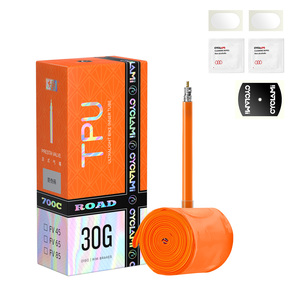
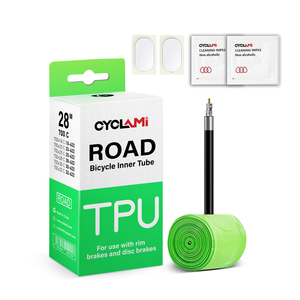
No. Traditional rubber patches and vulcanizing fluid rely on chemical reactions specific to rubber and will not bond to TPU. TPU tubes require dedicated adhesive TPU patch kits or self-adhesive alcohol wipe patches, which bond instantly to the TPU surface. We supply factory branded TPU repair kits alongside wholesale tube shipments.
Our baseline OEM custom box packaging and logo branding MOQ starts at 1,000 units per size specification. For standard unbranded or factory packaging, lower trial order quantities (500 units) can be arranged to support sample evaluation and road testing on Indian fleet bikes.
Because TPU tube walls are only 0.3mm thick compared to 0.9mm–1.3mm for butyl, a single 20ft shipping container can hold approximately 45,000 TPU inner tubes compared to only 12,000–15,000 standard butyl tubes. This represents a 3x to 4x improvement in freight efficiency.
Contact our engineering and sales export teams today for technical datasheets, wholesale price lists, sample requests, and custom OEM manufacturing terms tailored for Indian bike manufacturers and fleet operators.