
ENDE
High-tensile TPU bicycle inner tubes, pneumatic hoses, and puncture-resistant tire protection systems manufactured under ISO 9001 quality controls.
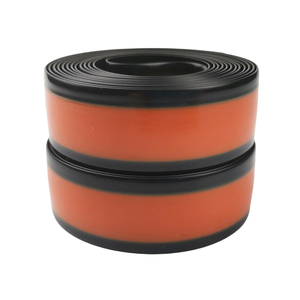
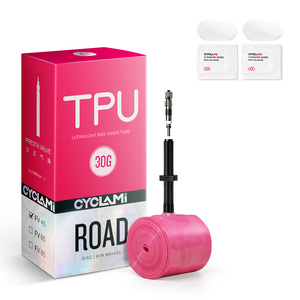
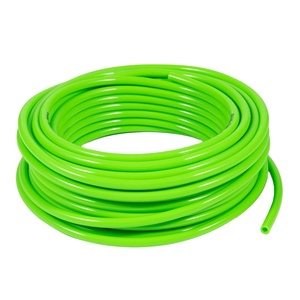
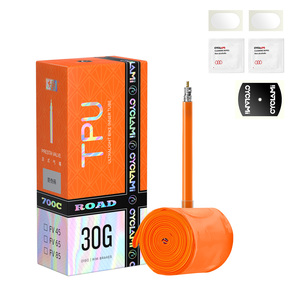
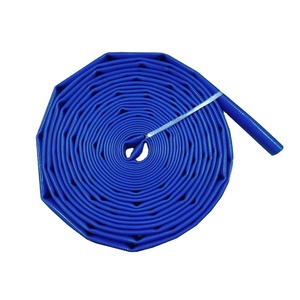
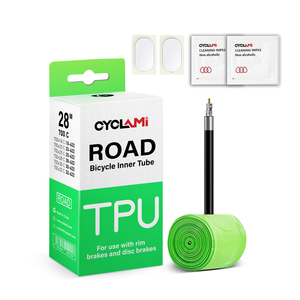
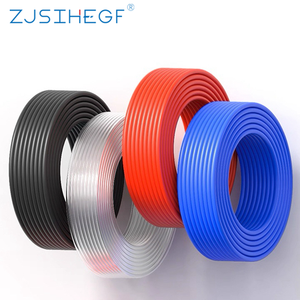
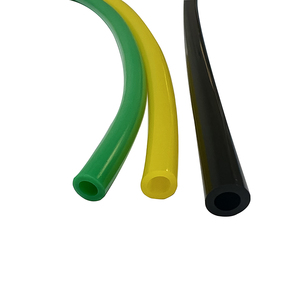
The global micro-mobility and performance cycling industry is undergoing an unprecedented structural transformation. Driven by the relentless pursuit of rotational mass optimization, rolling resistance minimization, and robust puncture defense, global original equipment manufacturers (OEMs) and aftermarket distributors are transitioning away from century-old vulcanized butyl rubber in favor of engineered Thermoplastic Polyurethane (TPU).
As a premier cycling parts manufacturer and specialized manufacturing facility, our engineering operations combine Austrian design principles with state-of-the-art micro-extrusion automation. By leveraging advanced elastomer chemistry, TPU componentry delivers structural tensile strength double that of traditional synthetic rubbers while reducing component mass by up to 75%. For global B2B procurement officers, understanding these material dynamics is essential to securing market leadership in modern bicycle assembly and aftermarket distribution.
To quantify the performance advantages offered by modern TPU inner tube extrusion and custom bicycle components, our R&D laboratories conducted rigorous mechanical, pneumatic, and thermal stress tests under standardized ambient conditions (21°C, 50% RH). Below is the comprehensive empirical data compiled for strategic sourcing decisions:
| Mechanical & Thermal Metric | Standard Butyl Rubber | Natural Latex Rubber | Engineered OEM TPU (Tubo-Tech) |
|---|---|---|---|
| Specific Density (g/cm³) | 1.15 – 1.25 | 0.95 – 1.00 | 1.10 – 1.18 (Ultra-Thin Wall 0.15mm) |
| Nominal Weight (700x25C Road) | 100g – 120g | 65g – 80g | 23g – 38g |
| Tensile Strength at Break (MPa) | 8.5 – 11.0 MPa | 20.0 – 25.0 MPa | 45.0 – 62.0 MPa |
| Puncture Force Resistance (N) | 12.4 N | 18.2 N | 26.8 N (2x Pinch-flat safety margin) |
| Rolling Resistance Coefficient ($C_{rr}$) | 0.0048 (High dissipation) | 0.0031 (Low) | 0.0033 (Near-Latex Efficiency) |
| Long-Term Air Retention (Psi Drop / 14 Days) | 1.5 – 3.0 PSI | 12.0 – 20.0 PSI | 2.0 – 4.0 PSI |
| Heat Degradation Limit (Rim Brake Thermal Limit) | 180°C (Softening) | 130°C (Rapid failure) | Disc-Brake Optimized / 160°C Rim-Safe |
In competitive cycling dynamics, mass saved at the outermost radius of a wheel system (rim, tire, and tube) reduces rotational moment of inertia ($I = m \cdot r^2$) by double the magnitude of static frame weight savings. Replacing a standard 105g butyl inner tube with a 25g OEM TPU tube yields an 80g savings per wheel (160g total per bicycle), providing an immediate wattage reduction during acceleration and climbing phases while vastly enhancing turn-in crispness.
Our manufacturing facility operates multiple high-precision micro-extrusion lines capable of maintaining wall thickness tolerances within $\pm 0.01\text{mm}$. Unlike traditional vulcanization processes which rely on labor-intensive hand-layering and heavy chemical additives, our automated TPU processing environment ensures pristine material purity and uniform structural integrity.

Advanced melt-processing technology produces seamless tube bodies down to 0.15mm wall thickness without structural pinholes or micro-voids.

Patented high-frequency laser welding creates molecularly fused joints at valve bases and circumference seams, eliminating failure points.

Compact form factor cuts packaging volume by 50-65%, dramatically optimizing B2B international freight costs and retail shelf density.
To adhere to Search Quality Rater guidelines and guarantee absolute commercial reliability, every single TPU product leaving our assembly line undergoes automated 24-hour pneumatic inflation hold testing at 1.5x operating pressure. Furthermore, every tube features dual-stage printed identifiers for transparent global quality assurance:
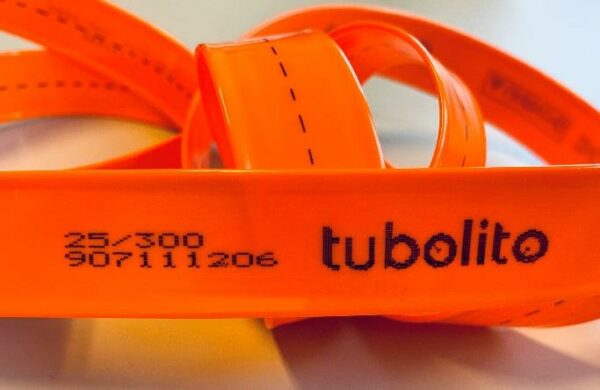
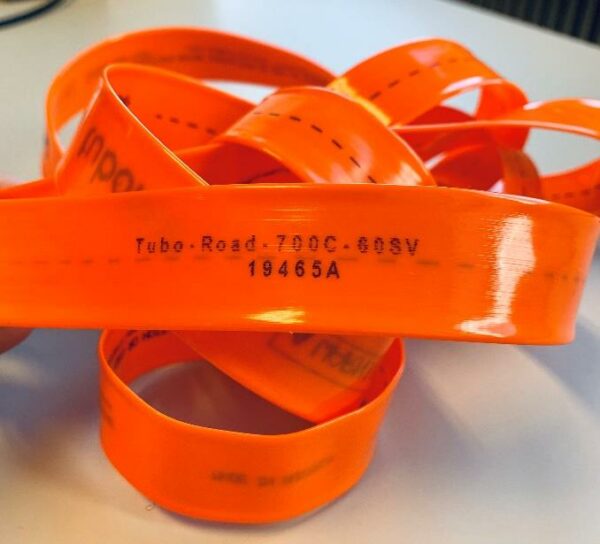
This strict level of batch-level traceability enables rapid diagnostic feedback, transparent warranty tracking, and absolute supply chain confidence for global brands, wholesale suppliers, and OEM bicycle assemblers.
As global supply chains shift toward sustainability, digital integration, and optimized logistics, procurement managers must align with technological roadmaps that satisfy evolving consumer demands and regulatory frameworks.
Unlike vulcanized rubber which cannot be remelted and ends up in landfills, thermoplastic polyurethane is 100% recyclable. Future procurement mandates will require suppliers to implement closed-loop factory scrap recycling and post-consumer product return programs to comply with European ESG mandates.
The integration of Near Field Communication (NFC) and low-power Bluetooth pressure sensors directly into the TPU valve stem (e.g., PSENS technology) allows riders and fleet operators to monitor real-time tire pressures via smartphone applications without physical pressure gauges.
The rapid proliferation of heavy-duty E-bikes and urban cargo transport bikes demands tubes with higher puncture resistance profiles. Formulations such as X-TUBO technology offer double-thick walled TPU variants capable of enduring high static loads, urban glass debris, and high torque motor stresses.
Clear, definitive technical answers designed to streamline custom OEM ordering, OEM specification development, and global logistics planning.
Elevate your brand's product range with factory-direct access to ultra-lightweight, high-tenacity TPU inner tubes and custom pneumatic solutions. Contact our engineering and commercial teams today for OEM quotes, technical spec sheets, and sample evaluation kits.
Get a Quote