China E-Bike Tube Manufacturing: Technical Whitepaper & Sourcing Guide
The global electric bicycle (E-bike) industry is undergoing a structural transition. As high-torque mid-drive motors, heavy-duty cargo e-bikes, and long-range commuter platforms gain dominant market share, standard bicycle inner tubes are reaching their physical limitations. Heavy hub-motor weight distribution, sustained high-velocity rolling resistance, and elevated braking temperatures demand advanced elastomer technology.
Industry Benchmark Insight: Leading Chinese tube manufacturers have shifted production capabilities from traditional vulcanized butyl rubber extrusions toward high-tensile Thermoplastic Polyurethane (TPU) compounding. TPU inner tubes engineered in China provide up to 75% mass reduction, twice the puncture resistance against snakebites, and a compressed storage volume that slashes international freight costs for OEM assemblers and distributors.
1. The Paradigm Shift: Thermoplastic Polyurethane (TPU) vs. Traditional Butyl Rubber
For decades, synthetic butyl rubber (isobutylene-isoprene copolymer) served as the default material for bicycle tubes due to its air retention properties. However, in modern electric mobility—where rotational inertia impacts battery efficiency and heavy chassis load increases pinch-flat frequency—butyl rubber exhibits key vulnerabilities:
Excessive Rotational Inertia: Standard e-bike heavy-duty butyl tubes weigh between 180g and 350g each. This extra rotating mass at the rim perimeter demands higher energy consumption from the e-bike battery during acceleration.
Friction & Heat Degradation: Sustained speed under heavy torque generates significant internal friction between the tire casing and butyl wall, increasing deformation resistance and thermal breakdown risks.
Bulk & Storage Logistics: Packaging 10,000 units of conventional butyl inner tubes requires immense container volume, severely inflating landed procurement costs per unit.
In contrast, premium China TPU inner tube factories utilize specialized aromatic and aliphatic TPU formulations featuring tight molecular cross-linking. The resulting tube wall thickness can be scaled down to 0.15mm – 0.3mm while doubling the force required to puncture the elastomer matrix.
Performance Parameter
Heavy-Duty Butyl Rubber
Standard TPU E-Bike Tube
Ultralight TPU (S-Tubo Specs)
Wall Thickness Range
0.80 mm – 1.20 mm
0.30 mm – 0.45 mm
0.15 mm – 0.20 mm
Average Weight (700C / 29er)
150g – 220g
45g – 65g
23g – 35g
Tensile Strength (MPa)
8 – 12 MPa
35 – 50 MPa
> 55 MPa
Puncture Force Threshold
Baseline (1.0x)
1.8x Baseline
2.2x Baseline
Packed Volume Reduction
0% (Standard Fist Size)
60% Smaller
78% Smaller (Jersey Pocket)
Recyclability Index
Low (Non-vulcanized Waste)
100% Thermoplastic Recyclable
100% Eco-Pure TPU
2. Advanced Manufacturing Processes in Chinese E-Bike Tube Factories
Sourcing directly from top China e-bike tube factories requires an understanding of the automated extrusion and seam-welding technologies utilized. High-end automated facilities operate cleanroom extrusion lines equipped with dynamic laser wall-thickness gauge monitors to ensure zero wall variance.
Co-Extrusion Precision
Continuous annular die extruders maintain strict +/- 0.01mm tolerance across multi-layer TPU films, eliminating structural weak spots across the tube perimeter.
High-Frequency Ultrasonic Welding
Instead of traditional thermal glue bonds which degrade under heat, state-of-the-art Chinese suppliers deploy automated ultrasonic ring welders to fuse the tube ends and valve stems seamlessly.
Reinforced Metal/TPU Valve Integration
To withstand high torque braking load without valve-tear-off, stems feature dual-anchored polymer bases bonded directly to the inner tube body.
Future E-Bike Tube Procurement Trends (2025–2030)
Global supply chain managers and OEM product directors must align their procurement strategies with upcoming technological and regulatory shifts across the cycling industry:
A. Integration of Smart Pressure Sensing (NFC / IoT Tubes)
Next-generation e-bike platforms are incorporating wireless diagnostic integration. Chinese factories are pioneering TPU tubes embedded with ultra-lightweight passive NFC chips (such as PSENS technology). Riders and maintenance technicians can scan tire pressure instantly via smartphone or integrated e-bike handlebar displays without unscrewing valve caps.
B. Standardization of Heavy Cargo & Fat-Tire Form Factors
Commercial last-mile delivery cargo e-bikes and wide-tire all-terrain e-bikes require specialized wide-gauge inner tubes. Procurement trends indicate a rapid surge in demand for 20x4.0", 26x4.0", and 27.5x2.4-3.0" TPU inner tubes that maintain pressure under payloads exceeding 200 kg.
C. Closed-Loop Circularity & ESG Compliance
With stringent European Union sustainability mandates (such as REACH and RoHS), European and North American buyers prioritize suppliers offering zero-waste production. Un-vulcanized thermoplastic polyurethane scrap generated during manufacturing can be re-melted and recycled into secondary industrial products, drastically reducing carbon footprint compared to non-recyclable vulcanized rubber.
Factory Enterprise Advantages & Operational Rigor
Collaborating with tier-1 Chinese manufacturing facilities guarantees Austrian-level precision engineering backed by massive scalable production capacity. Enterprise strengths center on complete batch traceability, rigorous quality testing, and extensive OEM discipline coverage.
Strict Batch Traceability & Quality Control
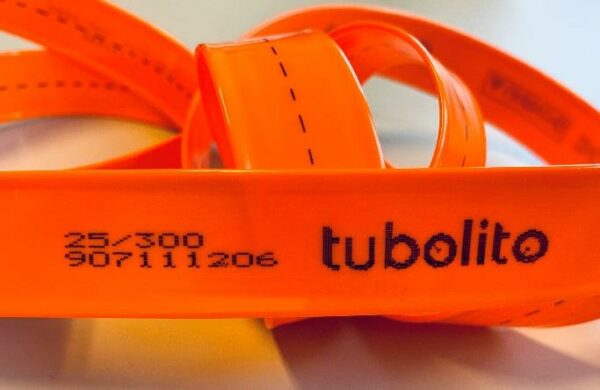
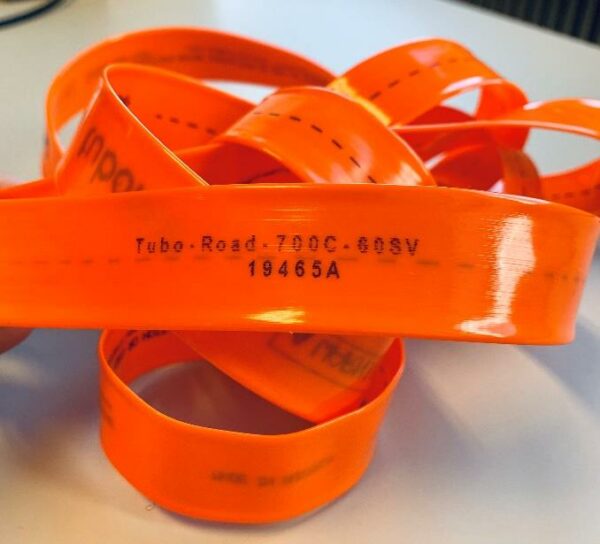
Every single tube manufactured under strict ISO9001 protocols carries two direct laser-printed identification codes to ensure complete transparency across international distribution channels:
Quality Assurance Protocol: Batch codes allow distributors to verify exact raw material lot numbers, extrusion machine logs, shift timestamps, and automated 24-hour pneumatic inflation pressure holding tests. Any reported issue can be isolated to a specific micro-batch immediately.
Full Discipline Versatility
OEM customization capabilities cover the full spectrum of cycling applications:
E-Bike & E-MTB: Heavy-duty reinforced TPU walls engineered for high torque and dynamic rim impacts.
Road & Gravel: Sub-30g ultralight TPU tubes reducing rotational inertia for maximum climbing and acceleration efficiency.
BMX & Folding Bikes: Compact 16", 20", and 24" specs engineered to save up to 60% packed volume (ideal for space-constrained folding bikes like Brompton).
Cargo & Commuter: X-Tubo extra-tough technology offering maximum puncture resistance for daily urban transport.
Frequently Asked Procurement Questions (FAQ)
Key technical and commercial answers for B2B buyers, OEM managers, and bike shop distributors sourcing e-bike tubes from China.
What makes TPU inner tubes superior to standard butyl tubes for electric bikes?
TPU (Thermoplastic Polyurethane) offers dramatically higher tensile strength and puncture resistance compared to butyl rubber at a fraction of the weight. For E-bikes, reducing tube weight lowers rotational mass at the wheel rim, improving battery efficiency, acceleration response, and overall handling agility. Furthermore, TPU tubes pack down to less than half the physical volume of butyl tubes, dramatically lowering container shipping costs and retail shelf space requirements.
Are TPU e-bike tubes compatible with rim brakes and disc brakes?
Disc brake systems are universally compatible with all TPU inner tube models. For rim brake applications, special heat-resistant TPU formulations or specific models must be selected. Because extreme prolonged braking on rim brake wheels can generate temperatures exceeding TPU melting points, ultralight race models (like S-Tubo series) are specified for disc brakes only, while standard e-bike and urban TPU tubes are thermal-tested for broader compatibility.
How can damaged TPU inner tubes be repaired in the field or workshop?
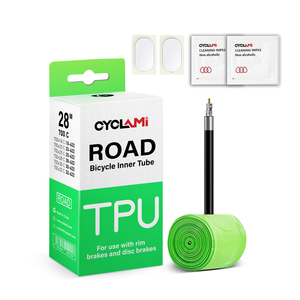
TPU inner tubes cannot be repaired using standard vulcanizing rubber glue and rubber patches, as vulcanizing agents do not bond chemically with thermoplastic polyurethane. TPU tubes require dedicated TPU patch kits consisting of special alcohol wipe surface cleaners and high-tack elastomeric adhesive patches designed specifically for polyurethane surface bonding.
What customization (OEM/ODM) options are available from China tube factories?
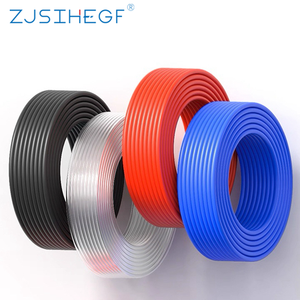
Leading Chinese factories offer comprehensive OEM/ODM customization including specific tube wall thicknesses (0.15mm to 0.45mm), custom color masterbatches (signature orange, clear transparent, high-visibility neon), custom Presta/Schrader valve lengths (45mm, 60mm, 85mm in aluminum or brass), private label laser etching, custom retail box packaging, and integrated NFC smart pressure sensor chips.
How do Chinese tube factories control quality and prevent air leakage?
Tier-1 manufacturers implement a 100% pneumatic pressure holding test. Every extruded tube is inflated to operational test pressure and monitored in cleanroom holding bays for 24 to 48 hours to verify pressure decay curves before final folding and packaging. Every tube is stamped with a unique product and batch code for complete 100% quality traceability.
What is the typical Minimum Order Quantity (MOQ) and lead time for wholesale procurement?
Standard factory MOQs for custom OEM logo printing and customized color runs typically range from 500 to 2,000 units per spec. Standard stock catalog items can often be ordered in smaller master carton quantities. Manufacturing lead times generally range between 15 to 30 days depending on valve customization and packaging requirements.
Ready to Upgrade Your E-Bike Lineup or Distribution Catalog?
Connect directly with our engineering team for sample requests, factory audit reports, custom OEM spec quotes, and wholesale pricing structures.