
ENDE
Direct OEM/ODM sourcing recommendations engineered for ultralight performance, puncture resistance, and commercial fluid transfer.
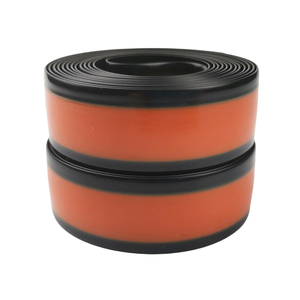
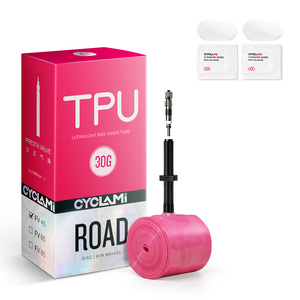
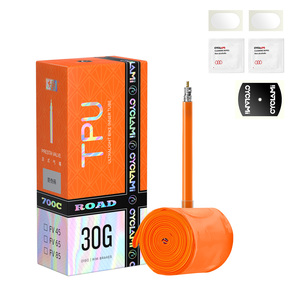
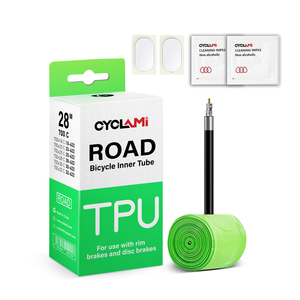
The global bicycle component sector is undergoing its most radical transformation in three decades. As international OEM brand managers, regional distributors, and fleet procurement executives evaluate their supply chains for 2026–2030, China has emerged not merely as a high-volume manufacturing hub, but as the premier innovation epicenter for advanced elastomeric polymers, high-tenacity thermoplastic polyurethane (TPU) inner tubes, and precision-engineered pneumatic tires.
Traditional synthetic butyl rubber (isobutylene-isoprene copolymer), which dominated the bicycle inner tube landscape since the mid-20th century, is increasingly viewed as an obsolete bottleneck in modern cycling dynamics. Traditional butyl tubes suffer from elevated rotational mass, poor mechanical puncture thresholds, high rolling resistance caused by internal material friction hysteresis, and significant bulk volume in shipping logistics. Leading Chinese manufacturing partners, synthesizing Western engineering breakthroughs—such as Austrian-developed high-tensile TPU film processing—with ultra-scalable precision extrusion lines, have set a new industry benchmark.
Key Procurement Insight: Sourcing TPU bicycle inner tubes from China's top tier factories cuts total rotational wheel mass by up to 75% while halving freight and warehousing volume metrics for international importers.
By replacing thick-walled vulcanized rubber with micro-engineered, multi-layer extruded Thermoplastic Polyurethane film (ranging from 0.15mm to 0.35mm wall thickness), top Chinese exporters are delivering products that exceed EN ISO 4210 safety standards while unlocking unprecedented mechanical performance for road racing, mountain biking (MTB), heavy-duty E-bikes, cargo logistics, and urban commuting.
Quantitative laboratory comparison across mechanical, thermal, and logistical parameters for B2B component buyers.
| Performance Metric | Standard Synthetic Butyl | Premium Chinese OEM TPU | B2B Operational Advantage |
|---|---|---|---|
| Average Mass (700x25C Road) | 100g – 120g | 23g – 30g | Reduces rotational mass by ~75%; improves wheel acceleration |
| Tensile Strength (MPa) | 8 – 12 MPa | 45 – 65 MPa | Over 4x raw polymer strength against sharp thorn penetration |
| Snakebite / Pinch Resistance | Baseline Threshold | 200% Higher Resilience | Dramatically lowers warranty returns for OEM bike brands |
| Packed Storage Volume | 100% Standard Cubic Vol. | 25% Compact Vol. | Quadruples container unit density; slashes shipping costs |
| Air Retention (Pressure Drop) | Loss over 3–5 days | Stable over 14+ days | Superior molecular density reduces gas permeability rate |
| Recyclability & Eco-Footprint | Non-recyclable thermoset | 100% Thermoplastic Recyclable | Aligns with EU ESG sustainability and REACH compliance |
For international procurement directors, identifying a reliable factory goes far beyond simple unit pricing. Top Chinese bicycle tire and tube exporters differentiate themselves by deploying rigorous quality management systems (QMS), automated cleanroom production environments, and total batch code traceability.
Unlike manual rubber compression molding, state-of-the-art Chinese TPU production relies on continuous cold co-extrusion technology. Integrated inline laser micrometers scan the tube wall thickness across 360 degrees in real time. If wall tolerance deviates by more than ±0.01mm, the extrusion line automatically self-adjusts. This guarantees that every TPU inner tube exhibits uniform tensile strength across its entire circumference, eliminating weak points that lead to high-pressure blowouts.
Adopting European quality control standards inspired by Austrian engineering protocols, top factories print twin identification markings directly onto each individual tube body:
This level of granular batch traceability ensures that if a technical defect is reported in any market worldwide, the manufacturer can isolate the precise batch within 24 hours, protecting importers from global recall liabilities.
Every batch undergoes pneumatic over-inflation testing exceeding 8.5 Bar pressure inside specialized containment chambers to verify seam weld integrity.
Simulating severe downhill braking heat, tubes are subjected to dynamic thermal friction tests exceeding 180°C to validate heat dispersion without structural deformation.
Reinforced valve stem connections are created via ultrasonic molecular fusion, preventing the common joint leaks found in traditional glued rubber stems.
As commercial buyers structure multi-year supply contracts with Chinese exporters, understanding upcoming technical trends is critical for maintaining market share. The bicycle tire and inner tube landscape is rapidly shifting toward smart connectivity, ultra-specialized discipline tuning, and circular economy compliance.
Next-generation TPU inner tubes feature embedded passive Near-Field Communication (NFC) chipsets directly fused into the TPU wall, such as TUBO-PSENS technology. Riders and fleet maintenance managers can scan the tire with a standard smartphone app to read real-time internal PSI/Bar pressure without applying a physical mechanical gauge to the valve stem. This eliminates valve core wear, prevents pressure drops during measurement, and integrates seamlessly into rental e-bike fleet management platforms.
Advanced R&D labs in top Chinese factories are introducing dual-extrusion TPU inner tubes with a micro-thin inner layer of visco-elastic self-healing polymer matrix. When a sharp object (such as a thorn or wire strand up to 2mm in diameter) pierces the casing, the internal pressure forces the elastomeric compound into the micro-cavity, sealing the leak instantly without requiring liquid chemical sealants that foul valve cores.
With the explosive growth of urban electric cargo bikes and mid-drive E-MTBs, traditional lightweight tubes suffer high pinch-flat rates under 150kg+ system payloads. Chinese exporters have developed reinforced TPU ranges (e.g., X-TUBO Heavy-Duty) featuring 0.35mm wall thickness paired with high-strength synthetic webbing liners. This provides maximum puncture protection while maintaining a weight advantage over bulky thorn-proof butyl tubes.
Under strict European ESG regulations (including the EU Digital Product Passport), vulcanized rubber inner tubes present severe disposal challenges because thermoset rubber cannot be remelted. In contrast, 100% pure Thermoplastic Polyurethane tubes can be mechanically shredded, re-pelletized, and extruded into secondary industrial products such as pneumatic air hoses, footwear outsoles, and protective industrial webbing straps.
Expert answers addressing OEM customizations, factory minimum order quantities (MOQ), compatibility metrics, and export compliance.