
Industry Whitepaper: The Strategic Evolution of Chinese Bicycle Accessories Supply Chains
The global bicycle and micro-mobility industry is undergoing a profound structural transition. Driven by the worldwide acceleration of urban commuter infrastructure, the rapid electrification of light vehicles (E-bikes and E-cargo trikes), and the booming gravel and adventure bikepacking market segment, the demand for high-reliability, lightweight, and technologically integrated bicycle accessories has reached an all-time peak. As the premier hub for global cycling equipment manufacturing, China’s industrial cluster in bicycle accessories has evolved from high-volume OEM replication to high-value ODM engineering, material science innovation, and agile manufacturing excellence.
For international procurement directors, OEM brand managers, and commercial distributors, securing a competitive market share requires moving beyond mere price-per-unit negotiation. It demands aligning with manufacturers capable of delivering true Information Gain, continuous product optimization, compliance with rigorous European chemical and safety mandates (REACH, RoHS, CE), and total supply chain traceability.
1. Future Sourcing Trends in Bicycle Accessories (2025–2030)
As micro-mobility infrastructure matures across North America, Europe, and Asia-Pacific, procurement leaders must anticipate three major technological shifts driving consumer adoption:
- Thermoplastic Polyurethane (TPU) Material Substitution: Traditional heavy rubber and soft PVC materials are rapidly being phased out. Modern cycling demographics demand ultralight, high-density TPU for inner tubes, frame protection, and waterproof bag bladders. TPU provides superior tensile strength per millimeter, dynamic flexibility across extreme temperature ranges (-30°C to +60°C), and 100% recyclability, fulfilling strict corporate ESG mandates.
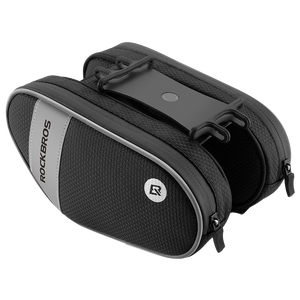
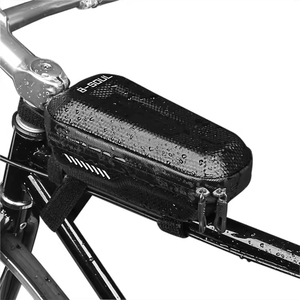
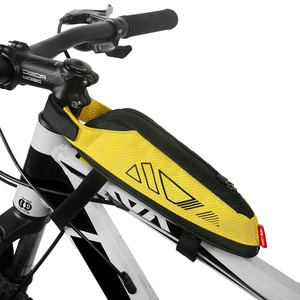
- Structural Integration & Hard-Shell Modular Aerodynamics: Soft-fabric bags are giving way to custom-molded 3D EVA hard-shell top tube containers and beam bags. These designs maintain structural integrity even when empty, reduce aerodynamic drag on road and gravel geometries, and protect sensitive consumer electronics (smartphones, GPS computers) via integrated anti-vibration padding.
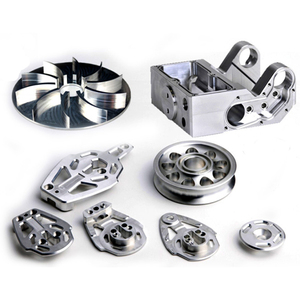
- Smart Micro-Mobility Connectivity & IoT Integration: Modern bike accessories are no longer passive. Top-frame phone bags now feature high-sensitivity TPU touch-screen membranes capable of facial recognition unlatching, integrated power-bank cable ports, and NFC pressure-sensing valves. Component engineering for E-trikes and Quad Cycles requires precision CNC alloy steel machining to withstand higher torque outputs from 250W–750W mid-drive motors.
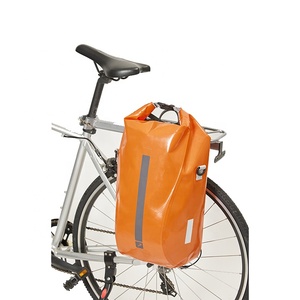
- Modular Quick-Release Fastening Systems: Commercial riders and everyday commuters demand rapid transition capability. Panniers and frame bags are increasingly specified with tool-free, multi-point mechanical lock systems that securely latch onto 8mm–16mm rack tubing, preventing lateral ejection during high-speed off-road descent.
2. Development Dynamics in High-Performance Bikepacking Equipment
Bikepacking has shifted from a niche subculture to a major profit driver for global cycling brands. Unlike traditional heavy touring racks, bikepacking gear relies on frame bags, top tube boxes, and handlebar bags attached directly to carbon fiber or alloy frames without braze-on eyelets. This imposes severe technical constraints on accessories manufacturers:
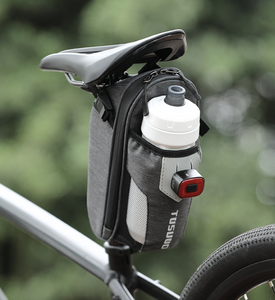
First, abrasion management is critical. Contact points between hook-and-loop straps and frame tubes experience continuous micro-vibrations carrying fine grit. Advanced Chinese manufacturers now incorporate anti-slip, non-marking Hypalon reinforced webbing and rubberized buckle backing to eliminate frame scuffing. Second, waterproof integrity must be absolute. Using high-frequency dielectric welding, outer fabric shells (840D Nylon or 420D TPU) are fused at the molecular level, creating a continuous barrier against water pressure exceeding 10,000 mm H2O.
3. Strategic Manufacturing Competencies & Quality Assurance Architecture
As a leading Chinese manufacturer and exporter, enterprise credibility (E-E-A-T) is rooted in measurable factory capabilities and quality assurance protocols. Our production ecosystem incorporates strict quality control gates across every stage of synthesis:
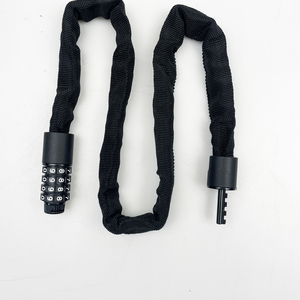
- Raw Material Spectrometry & Tensile Testing: Inbound shipments of aluminum alloy stock (7075 / 6061), steel chains, and TPU resins undergo automated spectral analysis to verify elemental composition and ultimate tensile strength before entering processing lines.
- Automated Precision CNC Machining: Machined accessories for E-bikes, trikes, and quad cycles are produced on 5-axis CNC machining centers, guaranteeing dimensional tolerances within ±0.01mm for critical drivetrain and structural mounting interfaces.
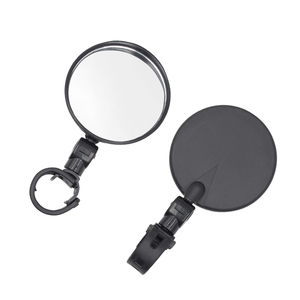
- Hydrostatic & Environmental Chamber Testing: All waterproof luggage lines undergo IPX6 water jet deluge trials and salt-spray chamber exposure (248 hours) to ensure corrosion resistance on metallic zippers, snap-locks, and rearview mirror swivel joints.
- Individual SKU & Batch Traceability: Emulating tier-1 automotive standards, each finished unit receives double-laser-etched or thermal-printed identifiers—a 9-digit product identification SKU alongside a 5-character batch code. This enables immediate root-cause feedback loops across raw material lots, vulcanization batches, or ultrasonic welding machine operators.
4. Strategic Guide for B2B Importers: Minimizing Sourcing Risks
Navigating global supply chains requires rigorous risk mitigation strategies during vendor assessment. Overseas buyers should evaluate four core criteria when selecting a Chinese bicycle accessories exporter:
A. Custom Tooling & Prototyping Speed: In-house CAD/CAM modeling and 3D rapid prototyping allow concept-to-sample delivery within 7 to 10 working days, drastically reducing product launch cycles.
B. Compliance Certification Portfolio: Ensure the factory maintains verifiable test reports for REACH SVHC (Substances of Very High Concern), RoHS electronic component safety, California Proposition 65 heavy metal compliance, and ISO 9001:2015 quality management systems.
C. Packaging & Freight Density Optimization: High-volume logistics costs demand intelligent spatial design. Lightweight TPU products and collapsible bikepacking bags yield up to 60% higher carton packing density compared to traditional rubber tubes or rigid basket assemblies, delivering substantial savings on ocean container freight fees.