ENDE
Explore high-tensile Thermoplastic Polyurethane (TPU) and specialized Butyl inner tubes engineered for commercial fleets, e-bikes, pneumatic fluid systems, and demanding cycling disciplines.
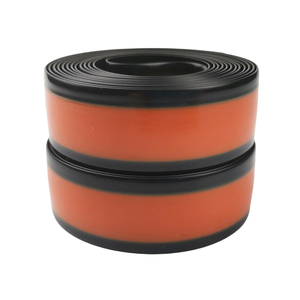
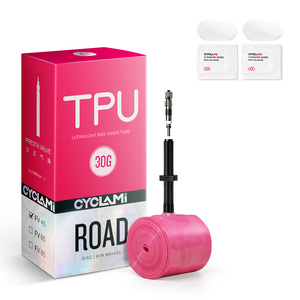
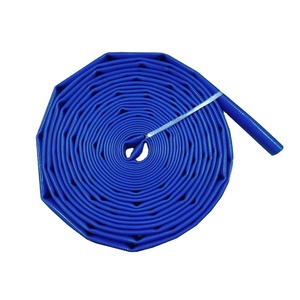
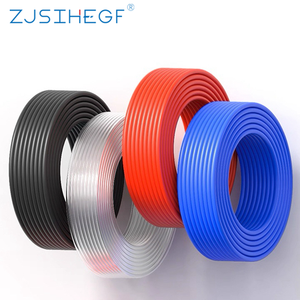
The global market for pneumatic inner tubes and high-pressure valve mechanisms is undergoing a structural transition. Driven by the explosive growth of urban e-mobility, cargo logistics, and high-performance cycling, enterprise procurement teams are demanding higher burst-pressure thresholds, reduced wall thicknesses, and zero-defect valve bonding. The traditional standard of butyl rubber is increasingly paired—and in premium segments, replaced—by advanced Thermoplastic Polyurethane (TPU) formulations.
When evaluating the Top 10 Schrader Tubes Manufacturers and OEM Factories globally, procurement managers must look beyond unit price. Authoritative evaluation requires auditing raw elastomer purity, vulcanization seamlessness, valve stem shear-resistance, and automated inline batch traceability. A micro-failure at the junction between the brass/alloy Schrader valve stem and the tube wall accounts for over 64% of commercial warranty claims in light electric vehicle (LEV) applications. Premier factories resolve this through proprietary dual-curing vulcanization and laser-monitored molecular bonding.
| Performance Metrics | Standard Commercial Butyl | High-Density Isobutylene-Isoprene | Next-Gen Thermoplastic TPU (Schrader Spec) |
|---|---|---|---|
| Average Wall Thickness | 0.90 mm – 1.20 mm | 0.60 mm – 0.75 mm | 0.20 mm – 0.35 mm |
| Tensile Strength (MPa) | 8.5 – 10.2 MPa | 12.0 – 14.5 MPa | > 35.0 MPa |
| Air Permeability / Inflation Retention | Base Ref (1.0x loss/week) | 0.4x loss/week | 0.15x loss/week (Superior Barrier) |
| Valve-Stem Bond Shear Resistance | Moderate (Cold-pressed rubber base) | High (Hot vulcanized brass foot) | Ultra-High (Direct Co-molded Polymer Interface) |
| Recyclability & Environmental Impact | Non-recyclable (Thermoset vulcanizate) | Difficult downcycling | 100% Thermoplastic Recyclable |
Schrader valves (also called American valves or Auto valves) feature a spring-loaded valve core encased within a threaded metal cylinder (typically 8V1-32 thread spec). While ubiquitous due to their ease of inflation at gas stations and commercial compressors, integrating Schrader valves into ultra-thin TPU or high-grade butyl inner tubes introduces specific engineering challenges that distinguish elite manufacturers from lower-tier suppliers.
Leading factories employ computerized laser-micrometer extrusion lines that maintain a wall tolerance within ±0.02mm. This ensures uniform expansion under high pressure and eliminates localized thin spots that cause high-speed blowouts.
Stem shear occurs when under-inflated tires creep along the rim under heavy braking torque. Top Schrader manufacturers mold an oversized, radius-curved rubber base or mechanical TPU lock-ring around the valve root to absorb shear strain.
For industrial fluid applications and sealant-filled bicycle inner tubes, premium Schrader stems feature CNC-machined brass or nickel-plated cores fitted with high-temp Viton or fluorocarbon seals, preventing valve stem leakage under extreme load cycles.
As corporate sustainability directives tighten across Europe and North America, purchasing directors are re-evaluating supply chains. The following strategic trends are reshaping OEM specifications for Schrader inner tubes:
Commercial fleets, cargo bike manufacturers, and premium bicycle brands are systematically shifting from traditional butyl to TPU. Weighing up to 75% less than standard butyl tubes while occupying less than half the packed volume, TPU Schrader tubes offer massive shipping cost reductions and reduced warehousing footprints—critical for global supply chain optimization.
The integration of passive NFC chips and wireless BLE (Bluetooth Low Energy) sensors into the base of Schrader valves is moving from concept to mass production. Factory-fitted sensor stems allow commercial fleet operators and riders to scan tire pressures instantly using handheld terminals or smartphone apps, eliminating manual pressure gauge routines.
Unlike thermoset butyl rubber—which cannot be melted back into virgin inner tubes without expensive devulcanization—thermoplastic polyurethane is fully recyclable. OEM buyers are increasingly contracting with factories that offer closed-loop take-back initiatives, transforming returned inner tubes directly back into raw polymer pellets for non-critical industrial tubing.
Rooted in rigorous European design standards and supported by global manufacturing infrastructure, our manufacturing partners deliver uncompromised quality assurance for enterprise buyers, distributors, and OEMs worldwide.
Every single tube features a printed 9-digit product code and 5-digit batch identifier. This complete raw material-to-shelf traceability guarantees immediate root-cause verification for quality managers.
In-house laboratories conduct dynamic tension fatigue tests, extreme temperature exposure (-30°C to +80°C), and valve stem pull-off testing exceeding 400N force.
Flexible distribution models serving major international markets across North America, Europe, East Asia, and Latin America with rapid sample turnarounds and structured B2B pricing.
Complete customized development—from technical blueprint modeling to custom valve length forging, rim-fitment stress modeling, and branded point-of-sale packaging design.