
ENDE
Engineered for extreme durability, reduced rolling resistance, and compact logistics. Browse top-tier OEM inventory ready for private label integration.
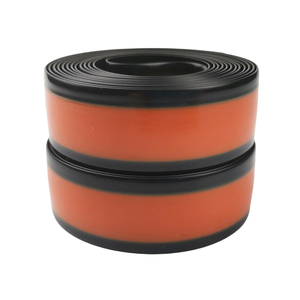
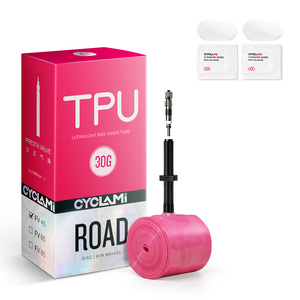
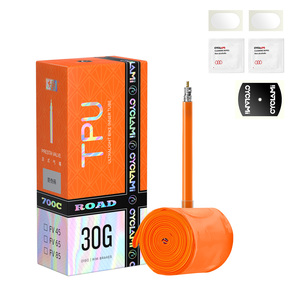
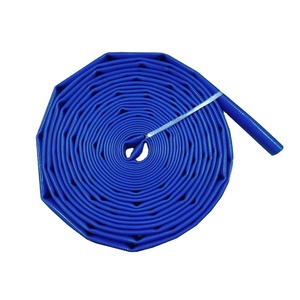
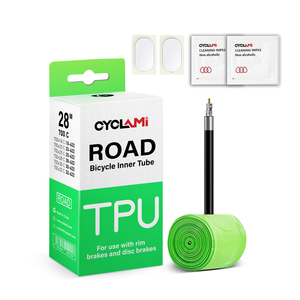
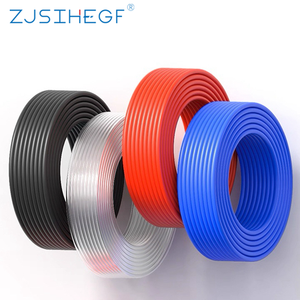
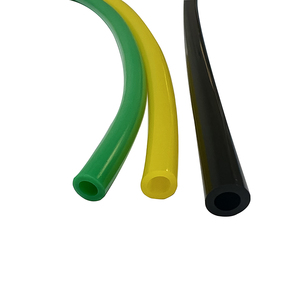
Utilizing high-molecular weight Thermoplastic Polyurethane (TPU), engineered to replace legacy heavy rubber formulations while delivering twice the tensile yield strength under extreme inflation pressures.
Shaving up to 70-80 grams per wheel off the outermost radius. This significantly diminishes moment of inertia, translating into immediate dynamic acceleration and crisp climbing performance for high-end complete bikes.
TPU’s unique viscoelastic deformation properties absorb localized mechanical pinches and sharp trail debris, reducing roadside flats and warranty claims for OEM brands.
The global bicycle manufacturing landscape is undergoing a structural transition toward lightweight, high-performance, and sustainable componentry. In 2026, OEM procurement managers, brand directors, and component distributors face unprecedented supply chain dynamics. Evaluating the Top 10 bicycle parts factories requires moving beyond unit price analysis to assess material engineering competence, production automation levels, supply chain flexibility, and total life-cycle compliance.
This technical whitepaper provides a rigorous framework for evaluating tier-1 bicycle parts suppliers, focusing on the revolutionary transition from legacy butyl rubber inner tubes to advanced Thermoplastic Polyurethane (TPU) pneumatic solutions.

When shortlisting factory partners for original equipment manufacturing (OEM) and private-label distribution, procurement teams must evaluate manufacturers across ten empirical criteria:
OEM Sourcing Insight: Conventional butyl tubes account for excessive shipping weight and volume, inflating landed costs by up to 30%. Switching to TPU tubes reduces packaging volume by 50% per container, optimizing overall procurement margins.
Understanding the microstructural advantages of Thermoplastic Polyurethane over vulcanized butyl rubber provides clear justification for upgrading OEM bike specifications.
| Performance Parameter | Standard OEM Butyl Tube | High-Performance TPU Tube | Strategic OEM Advantage |
|---|---|---|---|
| Average Mass (700x25c) | 100g – 120g | 23g – 35g | Reduces static wheel rotational weight by ~75% |
| Tensile Strength | ~8 – 12 MPa | > 45 MPa | Over 3.5x structural stress resistance before rupture |
| Puncture Elasticity | Low (Sharp tear under pressure) | High (Elongates around sharp object) | Drastically lowers field puncture service calls |
| Packed Physical Volume | ~350 cm³ (Bulky roll) | ~90 cm³ (Pocket dimension) | Saves 50-70% shelf space & shipping container volume |
| Material Recyclability | Non-recyclable cross-linked rubber | 100% Thermoplastic Re-meltable | Aligns with global corporate ESG & sustainability targets |
| Air Retention Stability | Standard diffusion rate | Equivalent or superior barrier property | Consistent tire pressure maintenance over extended rides |
Top-tier bicycle components factories differentiate themselves through technical rigor and traceable quality management workflows. Partnering with engineered TPU manufacturing leaders guarantees compliance across all supply chain touchpoints.
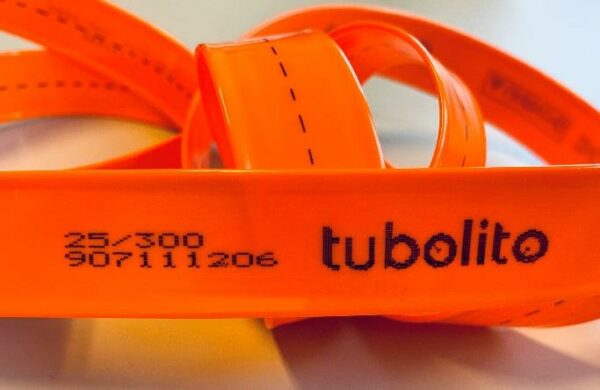
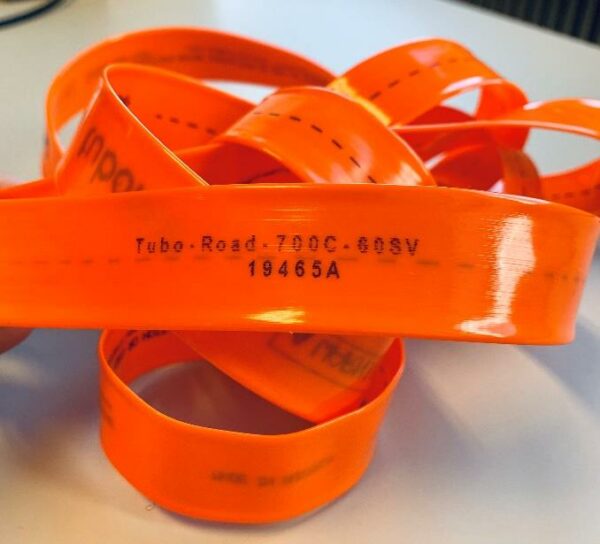
To eliminate assembly-line defects and guarantee accountability, our manufacturing methodology incorporates a dual-code tracking mechanism directly printed onto every single unit:
The global bicycle market demands component suppliers capable of meeting next-generation riding requirements. Key trends shaping factory production include:
With electric-assist bicycles generating high system torque and carrying total payloads exceeding 180kg, traditional inner tubes suffer high rates of pinch flats. Reinforced TPU formulations (such as double-wall extra-tough variants) provide the structural integrity required for urban delivery fleets and high-torque E-MTBs.
Advanced factories are embedding wireless Near Field Communication (NFC) and low-energy sensors directly into the polymer valve structures of TPU tubes. This allows mechanics and riders to instantly verify tire pressure using smartphones or head units without mechanical pressure gauges.
Global logistics costs demand maximum volumetric efficiency. Component buyers are actively shifting away from bulky rubber components. TPU tubes pack up to 75% smaller, enabling brands to fit dramatically higher piece counts per pallet, slashing carbon footprints and per-unit landed costs.
A TPU (Thermoplastic Polyurethane) inner tube is engineered from advanced synthetic elastomers rather than vulcanized rubber. This material allows for ultra-thin wall profiles (as low as 0.3mm) with high tensile yield strength. The result is an inner tube that is up to 75% lighter, significantly more compact, and more resistant to pinch flats than standard butyl tubes.
Because TPU tubes fold down to a fraction of the physical size of butyl tubes, they reduce retail packaging and master carton dimensions by up to 50-70%. This drastic volume reduction enables distributors to fit more units per sea freight container, lowering landed logistics costs per unit.
Compatibility depends on the specific product line. Standard and extra-tough TPU tube models are engineered to withstand high temperatures generated by rim braking. However, ultralight race variants (under 25g) are strictly recommended for disc-brake wheelsets to prevent heat deformation under prolonged braking. Always refer to specific model specs during OEM selection.
TPU tubes cannot be vulcanized using traditional rubber patches and chemical cement. They require dedicated elastomeric TPU patches with specialized solvent adhesives that form a molecular bond with the tube surface. Dedicated TPU patch kits restore 100% inflation integrity in minutes.
Yes. OEM contract manufacturing supports custom valve stem lengths (from 45mm to 85mm Presta, as well as Schrader), custom valve anodization, custom tube coloring, and full private-label packaging integration for qualifying minimum order quantities (MOQs).