
ENDE
Industrial-grade components engineered for extreme durability, reduced rolling resistance, and structural safety.
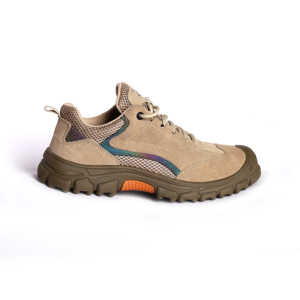
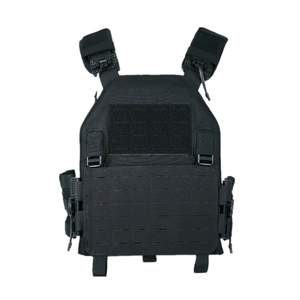
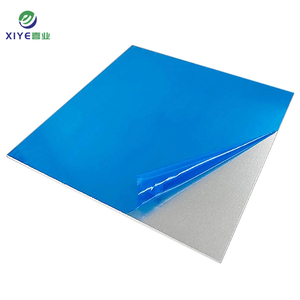
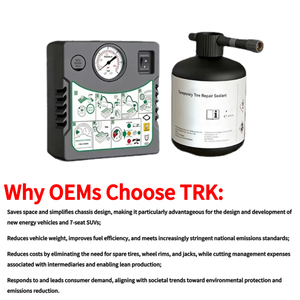
In modern industrial manufacturing, defense logistics, automotive engineering, and high-performance sports equipment, puncture resistance has shifted from a secondary safety feature to a critical engineering requirement. Traditional elastomeric formulations, such as basic vulcanized rubber and butyl compounds, often force engineers to compromise between tensile resilience, structural weight, thermal stability, and mechanical durability.
As a specialized OEM/ODM manufacturer, our R&D department leverages advanced material science—specifically cross-linked Thermoplastic Polyurethane (TPU), Ultra-High-Molecular-Weight Polyethylene (UHMWPE), and multi-ply synthetic tire-cord matrices—to deliver superior mechanical energy dissipation when subjected to localized sharp penetrators.
Thermoplastic Polyurethane (TPU) represents a major breakthrough in puncture defense. Unlike conventional butyl inner tubes or standard rubber membranes that suffer from rapid crack propagation under sharp stress points, specialized TPU exhibits high elastic recovery and superior elongation memory. The molecular structure of TPU combines hard segments (providing mechanical stiffness and puncture resistance) and soft segments (providing flexibility and impact absorption).
| Material Compound | Tensile Strength (MPa) | Puncture Resistance (ASTM F2878) | Specific Gravity (g/cm³) | Primary Industrial Applications |
|---|---|---|---|---|
| Thermoplastic Polyurethane (TPU) | 45 - 65 MPa | Very High (>120 N) | 1.12 - 1.18 | Ultralight Inner Tubes, Run-Flat Layers, Micro-Sensors |
| Vulcanized Butyl Rubber | 8 - 14 MPa | Moderate (35 - 50 N) | 1.30 - 1.45 | Standard Inner Tubes, Heavy Automotive Seals |
| UHMWPE Ballistic Weave | 2,500 - 3,200 MPa | Extreme (>450 N) | 0.97 | Personal Protective Vests, Stab Shields, Armored Liners |
| Multi-Ply Tire-Cord Elastomers | 18 - 28 MPa | Heavy Duty ISO Certified | 1.25 - 1.35 | Marine Launching Airbags, Dock Fenders, Heavy Rollers |
As demonstrated in the table above, transitioning to engineered polymers like TPU yields up to a 75% weight reduction while doubling puncture resistance under acute shear forces. This specific strength-to-weight ratio is instrumental for OEMs manufacturing next-generation e-bikes, military vehicles, commercial safety footwear, and maritime vessel handling systems.
To ensure total compliance across diverse global supply chains, our OEM/ODM products undergo rigorous mechanical validation protocols within certified testing laboratories:
Measures force required for hypodermic needles (21G to 25G) to penetrate elastomeric barriers, essential for medical grade protection and safety boots.
Evaluates blade cut resistance, tear resistance, and steel spike puncture thresholds (Level 1 to Level 4 certification) for personal defensive equipment.
Validates ultimate burst pressure, carcass layer adhesion, compression deformation durability, and sharp obstacle resistance for heavy dock operations.
The global demand for specialized puncture protection components is experiencing a shift driven by industrial automation, electrification, and modern sustainability mandates. Enterprise purchasing managers and OEM product developers must align their sourcing strategies with four critical market trends:
The integration of micro-NFC and RFID pressure sensors directly into puncture-resistant inner liners and run-flat inserts—similar to cutting-edge smart pressure-sensing systems (such as PSENS)—allows real-time telemetry tracking without physical valve contact. Fleet operators, e-cargo dispatchers, and industrial heavy machinery users can monitor structural integrity, tire pressure, and thermal expansion wirelessly via mobile software.
Traditional anti-puncture solutions relied heavily on steel plates, steel toe caps, or braided steel wire. Sourcing trends favor high-strength lightweight synthetics like Kevlar, UHMWPE, and reinforced thermoplastic polyurethane. These materials resist corrosion, provide superior ergonomic flexibility, pass airport/defense security magnetometers, and significantly reduce operational fatigue.
Regulatory frameworks such as EU REACH, RoHS, and ESG sourcing directives require manufacturers to reduce carbon footprints. Modern OEM production pipelines are transitioning toward 100% recyclable TPU formulas and bio-based elastomers that eliminate volatile organic compounds (VOCs) and halogenated flame retardants while retaining maximum physical toughness.
As autonomous off-road platforms, emergency utility vehicles, and military armored personnel carriers (APCs) expand, run-flat inserts must maintain stability even after complete pneumatic loss. High-density polymer inserts engineered to withstand ballistic punctures and multi-point sidewall tears are replacing legacy rubber run-flats.
We provide full-spectrum contract manufacturing, custom product design, and global wholesale supply. Our manufacturing facilities combine Austrian-inspired engineering standards with scalable production capacities to support world-class brands, tier-1 industrial buyers, and global distributors.
Every single manufactured unit features dual printed laser identifiers—including a 9-digit product code and an internal batch code—guaranteeing 100% batch-level quality control and fast claim resolution.
Our in-house CAD design, FEA simulation, and 3D mold tooling pipeline allow us to take custom puncture protection concepts from prototype to mass production in under 14 days.
With multi-line co-extrusion blow molding, vulcanization presses, and automated assembly systems, we supply high-margin solutions packed to meet exact logistics requirements.
Key answers for enterprise purchasing managers, technical engineers, and wholesale importers.
Whether you require custom TPU polymer formulation, private-label tire sealant systems, or heavy industrial puncture barriers, our engineering team is ready to support your sourcing requirements.
Send an Inquiry