ENDE
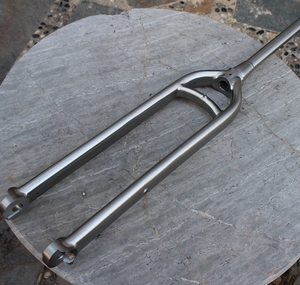
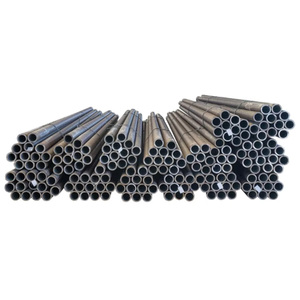
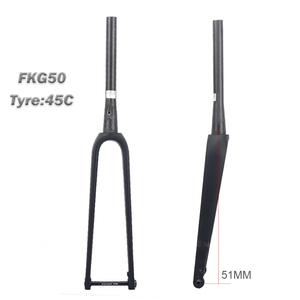
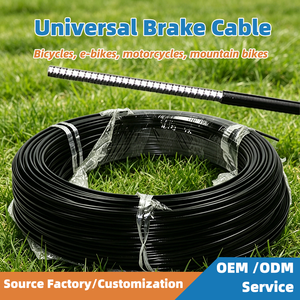
As a leading global tier-1 cycling component contractor, our manufacturing framework covers high-tensile inner tubes, specialized alloy frame tubing, structural carbon forks, and customized brake housings engineered to withstand brutal Cyclocross (CX) and All-Road environments.
Cyclocross (CX) represents one of the most punishing environments in competitive cycling. Characterized by rapid accelerations over mud, sand, off-camber off-road turns, barriers, and extreme tire pressure variances (often dropped as low as 1.2 to 1.8 bar for traction), the inner tube serves as a critical mechanical threshold. For global bicycle manufacturers, OEM procurement directors, and aftermarket brand managers, sourcing Cyclocross inner tubes requires balancing rotational mass reduction, air retention stability under violent sidewall deflection, and structural joint integrity.
While tubeless setups have captured significant market share, OEM tube integration remains essential for compliance, assembly-line efficiency, emergency racing spares, and high-performance alternative materials like Thermoplastic Polyurethane (TPU). Modern OEM/ODM procurement must go beyond low-unit-cost sourcing toward strategic engineering partnerships that deliver high information gain, standardized material safety compliance, and rigorous zero-defect quality control protocols.
| Polymer Material | Avg. Weight (700x33C) | Tensile Strength (MPa) | Puncture Force Resistance | Pinch Flat Susceptibility | Recyclability & Eco Footprint |
|---|---|---|---|---|---|
| Standard Butyl Rubber | 110g - 130g | 8 - 10 MPa | Baseline (1.0x) | High (Thick walls shear under rim strikes) | Low (Vulcanized rubber non-recyclable) |
| Lightweight Butyl (Thin Wall) | 75g - 90g | 9 - 11 MPa | Low (0.75x) | Extreme (Prone to pinch flats) | Low (Non-recyclable elastomer) |
| Natural Latex Elastomer | 55g - 65g | 18 - 22 MPa | High (1.6x) | Moderate (Highly elastic but porous) | Biodegradable (Natural sap derivative) |
| Engineered TPU (Tubolito Standard) | 35g - 55g | 35 - 50 MPa | Superior (2.0x - 2.5x) | Ultra-Low (High elongation at break) | 100% Recyclable Thermoplastic |
Procurement volume for TPU inner tubes in the OEM gravel and cyclocross sectors is projected to grow at a CAGR of 18.4% through 2030. B2B buyers are replacing heavy butyl tubes in original complete bike specs to advertise lower total bike weight right off the showroom floor without spending hundreds of dollars on carbon wheel upgrades.
Cyclocross and all-road tire clearance standardizations have expanded from traditional 33mm FIA limits to 38mm, 42mm, and 45mm gravel hybrid profiles. OEM manufacturers must now provide variable wall-thickness extrusion capability to accommodate wide-section tires without localized thin-spot failure during high-pressure inflation.
EU Digital Product Passport (DPP) mandates and stricter CBAM rules are forcing brand managers to request origin tracking down to raw material batches. Enterprise procurement requires partner factories equipped with lot-level laser etching, verified carbon footprint disclosures, and circular recycling programs for post-industrial scrap.
Inner tube engineering has shifted from basic rubber molding to high-precision polymer chemistry and automated thermal welding. Key technological breakthroughs driving modern OEM/ODM factories include:
Traditional butyl tubes rely on overlapped vulcanized seams, which introduce structural weak points and imbalance rotating mass. Advanced TPU factories utilize computer-controlled ultrasonic welding to fuse tube ends and valve bases seamlessly, maintaining uniform wall thickness across 360 degrees.
Pioneered by technologies such as TUBO-PSENS, modern inner tubes can now incorporate passive NFC chips molded directly into the valve root or tube body. This allows riders and mechanics to read exact internal pressure via smartphone apps without mechanical valve depressurization, minimizing pressure loss prior to race starts.
With the proliferation of disc brakes, heat transfer to inner tubes primarily occurs through ambient rim warming during heavy braking. However, for legacy rim-brake Cyclocross and road builds, high-temperature TPU resins paired with aluminum-reinforced Presta valve stems prevent heat-induced valve separation under prolonged friction loads.
Our manufacturing infrastructure is anchored by strict quality control standards derived from Austrian engineering benchmarks. To guarantee absolute field reliability for tier-1 bicycle brands and international distributors, every single inner tube produced in our facility undergoes a rigorous multi-stage verification framework:
Every tube is permanently laser-imprinted with two distinct quality control codes:
Zero-defect manufacturing requires that 100% of finished tubes spend 24 hours in automated pneumatic holding bays before final folding and packaging. High-resolution sensor arrays flag micro-porosity pressure drops as small as 0.02 bar, auto-ejecting sub-standard units prior to export packing.
Navigating market shifts toward lightweight performance, extreme endurance, and sustainable manufacturing requires an agile, technically capable production partner. From bespoke frame tubing sets (AISI 4130 / Titanium / Carbon) to ultra-lightweight TPU and heavy-duty natural rubber inner tubes, our engineering group delivers unmatched supply chain predictability, competitive factory pricing, and rigorous quality assurance.