
ENDE
Engineered for high load capacities, extreme puncture resistance, fluid transfer, and pneumatic reliability.
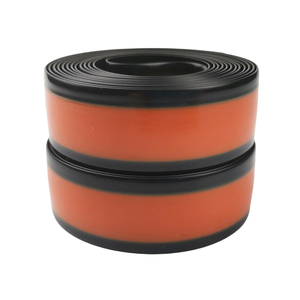
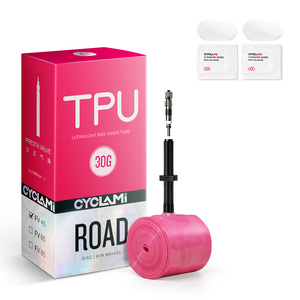
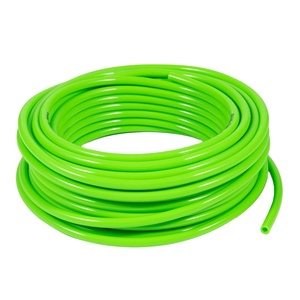
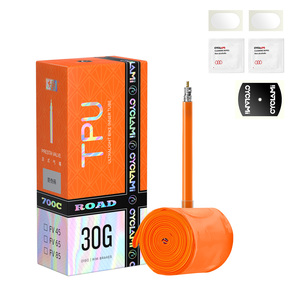
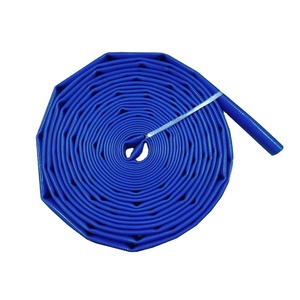
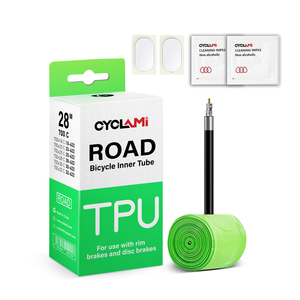
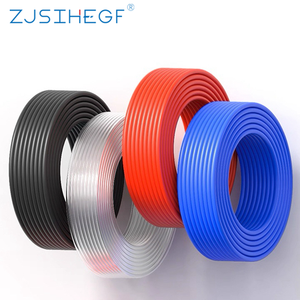
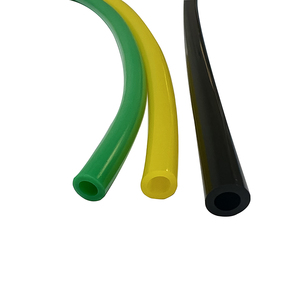
In the rapidly expanding global logistics ecosystem, traditional vulcanized butyl rubber tubes are reaching their physical limits. Commercial e-cargo bicycles, heavy-duty utility trailers, and automated industrial pneumatic systems subject pneumatic inner liners to unprecedented multi-axial forces, continuous cyclic deformation, and sustained load vectors. Traditional butyl rubber suffers from high viscoelastic hysteresis, leading to internal heat buildup, structural softening, and excessive rolling resistance under payloads exceeding 150 kg.
For enterprise procurement officers, original equipment manufacturers (OEMs), and fleet operators, transitioning to engineered TPU cargo tubes directly translates to reduced fleet maintenance downtime, lower energy consumption per kilometer (via decreased rolling mass at the rim perimeter), and total elimination of premature pinch flats caused by rim snakebites under heavy cargo compression.
As global regulatory frameworks prioritize carbon neutrality and last-mile urban delivery optimization, B2B procurement strategies for cargo tubes and pneumatic hoses are undergoing a fundamental paradigm shift. Supply chain decision-makers must align with four macro trends:
Commercial micro-mobility fleets require specialized tubes rated for higher static axle loads. Future OEM specs demand reinforced wall profiles (0.35mm–0.6mm) capable of sustaining 6.5+ bar pressure without radial expansion memory loss.
Next-generation cargo tubes incorporate embedded passive NFC/RFID pressure sensors directly into the TPU matrix. Fleet managers can scan tire pressure in real-time without manual valve connection, optimizing fleet uptime.
Replacing manual cold-vulcanization, advanced factories utilize high-frequency precision laser welding for valve stem interfaces. This eliminates structural weak points and guarantees continuous air retention over long storage intervals.
Comparative technical data evaluated under standardized ISO 527 and DIN 53516 test protocols:
| Performance Parameter | Standard Butyl Rubber Tube | Ultralight TPU Road Tube | Heavy Cargo Duty TPU Tube | Ester/Ether Industrial PUR Hose |
|---|---|---|---|---|
| Material Density (g/cm³) | 1.15 – 1.30 | 1.12 – 1.18 | 1.18 – 1.22 | 1.20 – 1.25 |
| Tensile Strength (MPa) | 8.0 – 10.5 | 35.0 – 45.0 | 50.0 – 65.0 | 40.0 – 55.0 |
| Elongation at Break (%) | 450% | 420% | 550% | 500% |
| Tear Propagation Resistance (N/mm) | 22.0 | 65.0 | 110.0 | 85.0 |
| Weight per 20" Cargo Wheel Unit | approx. 140g | approx. 34g | approx. 83g | N/A (Hose Application) |
| Aging & Ozone Degradation Resistance | Poor (Deteriorates in 24 months) | Exceptional (10+ years stable) | Exceptional (10+ years stable) | Exceptional |
| Air Retention Loss Rate (Bar/Month) | ~0.8 Bar | ~0.4 Bar | ~0.2 Bar | Zero Leakage (Closed Loop) |
As a premier OEM/ODM exporter and factory partner, our manufacturing hub enforces rigorous quality assurance (QA) frameworks compliant with ISO 9001 and IATF 16949 standards. Every batch of TPU resin undergoes melt flow index (MFI) verification before entering high-precision multi-layer co-extrusion lines.
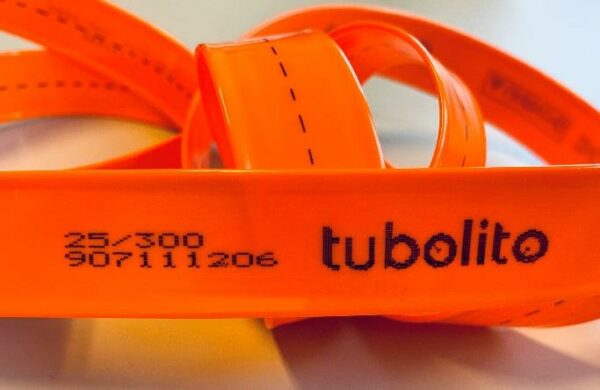
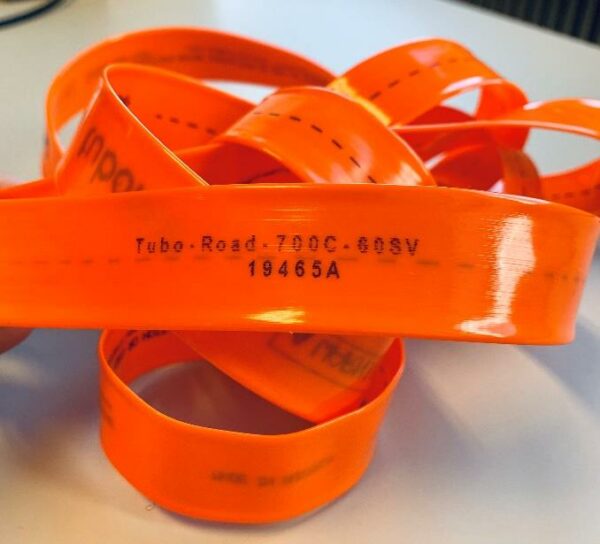
Full Serial & Batch Code Traceability:
To guarantee complete accountability for global distributors, logistics networks, and OEM brand partners, every single manufactured tube is permanently laser-etched with dual tracking identifiers:
This closed-loop inspection system allows enterprise buyers to track technical quality feedback instantly to the exact minute of production.
Expert answers addressing bulk procurement, engineering customization, and technical parameters.
TPU (Thermoplastic Polyurethane) inner tubes provide twice the puncture resistance against thorns, sharp debris, and rim pinch flats while reducing rotating mass by up to 75%. Because cargo bikes carry higher payloads, butyl tubes generate intense friction heat, causing wall thinning and sudden blowouts. TPU maintains mechanical stability across temperature ranges from -30°C to +80°C, ensuring dramatically lower fleet downtime.
Yes. Our extrusion facility provides comprehensive ODM/OEM capabilities. We offer custom wall thickness options from 0.15mm (ultra-racing grade) up to 0.60mm (heavy-duty cargo/e-bike grade), custom durometer hardness (Shore 75A to 98A), specialized valve lengths (45mm, 65mm, 85mm Presta or Schrader), CNC aluminum/brass valve bonding, and Pantone-matched tube colorways.
TPU has a high melting point and superior thermal degradation thresholds compared to latex or standard synthetic rubber. For heavy disc-brake cargo bikes, our reinforced Tubo-Cargo and X-TUBO lines feature heat-stabilized polyurethane formulations designed to resist localized heat transfer from long hill descents under maximum payload.
TPU tubes cannot be vulcanized using standard rubber cement. Field repairs require dedicated elastomer-compatible TPU self-adhesive patches or alcohol-cleaned adhesive contact patches. Repair bonds reach full shear strength within minutes, allowing commercial fleet riders to resume operations almost instantly without tube removal in many instances.
Standard catalog MOQ starts at 500 units per sizing SKU, while full custom OEM/ODM packaging and logo laser-engraving projects typically require 2,000 units. Standard production lead times range from 14 to 25 business days depending on co-extrusion line scheduling, backed by complete export documentation (REACH, RoHS, ISO9001 compliance certificates).
Upgrade your product lineup, optimize commercial fleet durability, and decrease shipping logistics volume with high-efficiency TPU pneumatic solutions. Contact our engineering team for immediate sample requests and wholesale quotation sets.
Send an Inquiry