
ENDE
Explore our high-performance ODM/OEM products designed for ultra-lightweight road cycling, puncture-resistant MTB trails, heavy-duty e-bikes, and pneumatic industrial applications.
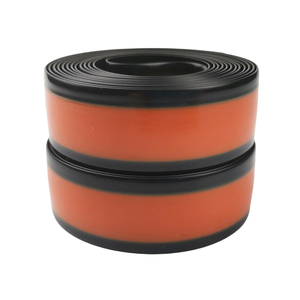
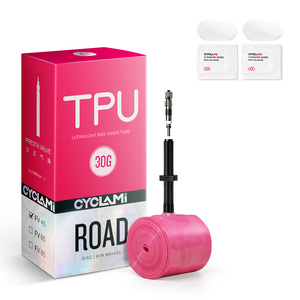
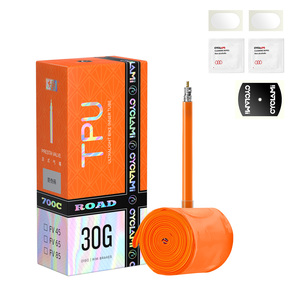
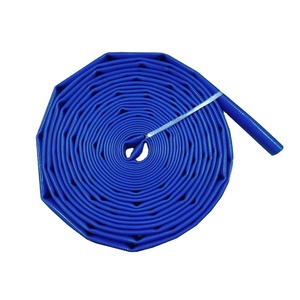
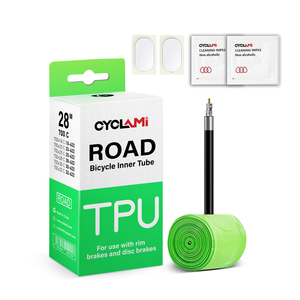
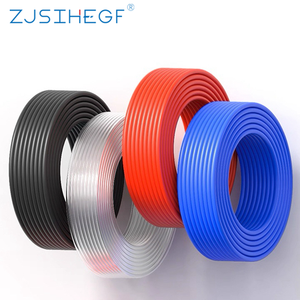
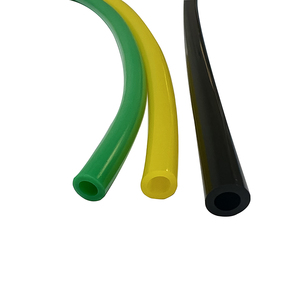
In the rapidly evolving global cycling hardware sector, traditional vulcanized synthetic rubber (isobutylene-isoprene or butyl) is facing structural obsolescence. Modern bicycle engineering demands exponential improvements in rotational mass reduction, thermal stability, pneumatic pressure retention, and structural compactness. As a premier OEM/ODM Bike Components Factory & Exporter, our manufacturing facility leverages state-of-the-art Thermoplastic Polyurethane (TPU) extrusion and automated high-frequency acoustic welding to redefine tire system dynamics.
Thermoplastic Polyurethanes represent a unique class of block copolymers featuring alternating hard (isocyanates) and soft (long-chain diols) segments. This molecular architecture grants TPU pneumatic inner tubes extraordinary tensile mechanical strength, extreme elastic recovery, and remarkable resistance to abrasive puncture. Unlike traditional vulcanized rubber, which relies on irreversible chemical cross-linking, engineered TPU can be repeatedly melted, extruded, and reshaped without polymer degradation. This molecular flexibility allows our R&D engineers to decrease inner tube wall thickness down to a precision metric of 0.15mm to 0.35mm, achieving ultra-lightweight performance without compromising structural integrity.
From an advanced biomechanical and physics standpoint, weight saved at the outer radius of a bicycle wheel (the rim, tire, and tube assembly) yields double the performance advantage compared to static weight saved on the frame. Rotational inertia ($I = m \cdot r^2$) dictates the kinetic energy expenditure required during acceleration and climbing. By transitioning from a standard 100g butyl tube to our custom OEM 23g–30g S-TUBO / Ultralight TPU series, professional fleets and consumer cyclists trim up to 150 grams of rotating mass per wheelset. This directly reduces inertial resistance during dynamic speed transitions.
Furthermore, energy loss in pneumatic tires is primarily governed by material hysteresis—the cyclic viscoelastic damping that converts mechanical rolling energy into waste heat. Standard butyl rubber exhibits a high loss tangent ($\tan \delta$), causing noticeable rolling energy dissipation under tire deflection. Our specialized ether-based polymer formulations dramatically suppress internal friction loss, delivering a 68% reduction in rolling resistance hysteresis when tested against premium butyl counterparts at equivalent inflation pressures (100 PSI / 6.9 Bar).
| Performance Parameter | Standard Butyl Rubber | Natural Latex Rubber | Engineered OEM TPU Tube | S-TUBO Ultralight TPU |
|---|---|---|---|---|
| Average Mass (700x25C) | 100g - 120g | 75g - 85g | 38g - 40g | 23g - 25g |
| Tensile Strength (MPa) | 8 - 12 MPa | 20 - 25 MPa | 45 - 55 MPa | 60+ MPa |
| Elongation at Break (%) | 300% - 400% | 700% - 800% | 450% - 550% | > 500% |
| Puncture Energy Threshold | Baseline (1.0x) | 1.3x Baseline | 2.0x Baseline | 2.4x Baseline |
| Packed Physical Volume | 100% (Standard Fist) | 90% Volume | 35% Volume | 25% (Jersey Pocket) |
| Air Retention (Pressure Drop/Wk) | Low (~3 - 5 PSI) | Extremely High (~20+ PSI) | Low (~4 - 6 PSI) | Moderate (~5 - 7 PSI) |
| Thermal Degradation Threshold | 130°C | 80°C (Poor Heat Tolerance) | 120°C (Disc Brake Opt) | Disc-Brake Recommended |
| End-of-Life Recyclability | Non-recyclable (Thermoset) | Biodegradable / Difficult | 100% Thermoplastic Recyclable | 100% Circular Material |
Our automated manufacturing facility operates continuous precision extrusion lines, micro-laser welding apparatus, and 100% automated quality assurance checking.
Utilizing dual-screw computerized extruders, we maintain sub-micron wall uniformity across entire tube bodies. This eliminates structural weak spots, preventing high-pressure blowouts along perimeter boundaries.
Instead of weak chemical adhesives, our seamless tubes utilize molecular ultrasonic fusion. Valve stems and joint seams are molecularly bonded, creating absolute air containment under extreme shear force.
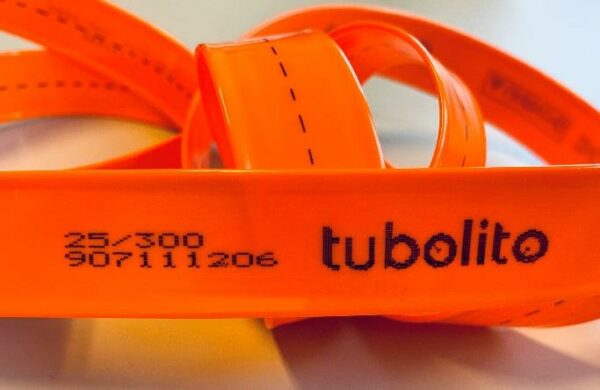
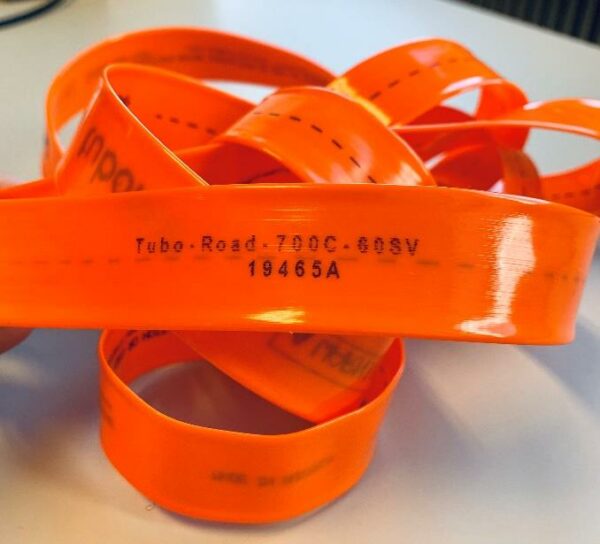
Every OEM unit is laser-engraved with a 9-digit product identification code and a 5-digit batch tracking number, facilitating complete B2B quality auditing and supply chain accountability.
We enforce rigorous quality verification across every production batch. Laser marking guarantees transparency from raw resin pellets to final packaged products.
As global bicycle brands, distributors, and Original Equipment Manufacturers (OEMs) navigate shifting consumer expectations and stringent environmental regulations, the procurement landscape for bicycle components is undergoing a profound structural pivot. Modern purchasing directors are transitioning away from high-volume, low-margin commoditized rubber goods in favor of technologically differentiated, sustainable componentry. Our research highlights four core procurement vectors that will define the market leading up to 2030:
Global trade mandates—specifically European Union ESG reporting standards and carbon boundary adjustments—are accelerating the elimination of vulcanized synthetic rubbers. Vulcanized rubber cannot be re-melted or easily recycled due to permanent cross-linked sulfur bonds, making standard inner tubes a major landfill burden. In contrast, 100% virgin thermoplastic polyurethane (TPU) is fully recyclable within closed-loop industrial processes. Outdated butyl inventory poses long-term compliance risks for global brand portfolios; forward-thinking OEM purchasing departments are standardizing on fully recyclable TPU platforms to fulfill ESG commitments.
The meteoric rise of electric bikes (E-bikes), utility commuter fleets, and heavy e-cargo transport vehicles has reshaped mechanical stress profiles. E-bikes generate substantial torque and carry heavy system payloads, resulting in rapid pinch-flat occurrences (snakebites) and accelerated bead wear on standard butyl tubes. The procurement market demands reinforced, high-viscosity TPU formulations—such as our X-TUBO and Cargo Series—capable of withstanding extreme lateral shear stress and severe impact loads without structural puncture.
Component digitisation is no longer confined to electronic shifting systems. Modern OEM brands are embedding near-field communication (NFC) and passive micro-sensors directly within pneumatic inner tubes. Technologies like the TUBO-PSENS series allow cyclists and mechanics to read exact tire inflation pressures instantly via smartphone applications without contacting valve stems or using external pressure gauges. Future OEM sourcing bids will increasingly specify pre-integrated smart telemetry components.
Global logistics volatility has forced B2B distributors to analyze warehouse footprint utilization and landed freight costs per unit. A standard Master Carton containing 100 traditional butyl road tubes occupies a substantial cubic volume due to rubber bulkiness. Conversely, folded TPU inner tubes achieve a 70% volume reduction. Distributors can containerize nearly 3.5 times the quantity of TPU units per freight pallet, dramatically lowering shipping costs per unit, customs clearance fees, and domestic warehousing overheads.
Technical answers regarding material specs, custom OEM branding, valve stem bonding, rim brake compatibility, and logistics.
Thermoplastic Polyurethane (TPU) provides three main performance upgrades: (1) Weight Savings: TPU reduces tube weight by up to 75% (saving 70g–80g per wheel compared to standard butyl), significantly cutting rotating mass. (2) Puncture Strength: High tensile mechanical strength provides double the puncture and pinch-flat protection of rubber at equal wall thickness. (3) Compactness: Extremely thin wall extrusion allows the tube to pack down to roughly 25% of the volume of butyl, ideal for compact saddle bag or jersey storage.
Yes. As a dedicated OEM/ODM factory, we provide complete custom production lines. We can tune extrusion wall thickness from 0.15mm (ultra-light road racing specs) to 0.40mm (heavy e-cargo specs), formulate custom Pantone colors (including dual-color webbing and transparent options), offer CNC aluminum Presta or Schrader valves in 45mm, 65mm, and 85mm lengths, and deliver fully customized private-label retail packaging tailored to your brand guidelines.
Compatibility depends on the specific model design. Standard Tubo and X-TUBO models feature high thermal degradation resistance engineered to withstand heat buildup from rim braking on long descents. However, for extreme ultralight models (such as the 23g S-TUBO series), we recommend usage exclusively with disc-brake wheelsets to prevent thermal deformation during prolonged rim braking. Detailed operational guidelines are printed on all OEM model packaging.
TPU cannot be repaired using conventional vulcanizing rubber cement because chemical rubber solvents do not react with thermoplastic polyurethane. Repairs require dedicated TPU patch kits utilizing specialized alcohol cleaning wipes and high-tack elastomeric adhesive patches. Our factory supplies dedicated B2B branded patch kits that bond permanently to the tube surface in under 30 seconds without vulcanization wait times.
Our factory operates a strict 100% double-stage pneumatic testing protocol. Every manufactured inner tube is inflated to 0.5 Bar working pressure and held in automated storage racks for 24 hours. Optical pressure telemetry sensors automatically detect and reject any unit exhibiting a pressure drop greater than 0.01 Bar. Following air testing, tubes undergo automated optical laser scanning to verify seam integrity and valve joint alignment before final packaging.
Standard OEM orders for catalog models carry a low baseline MOQ of 500 units per specification. Custom color formulations, private-label box packaging, or unique valve configurations carry an MOQ of 2,000 units. Rapid prototype samples can be produced and dispatched within 7 to 10 working days, while full commercial production runs are typically completed within 25 to 35 calendar days depending on order volume.
Elevate your product line with Austrian-engineered TPU technology, sub-micron extrusion precision, and verified global batch traceability. Contact our engineering team today to request custom technical samples, factory compliance audits, or B2B volume pricing quotes.