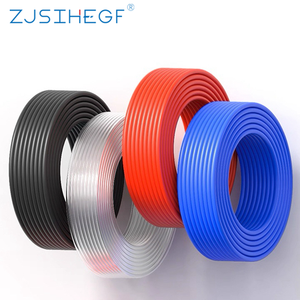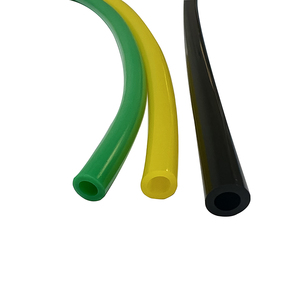
Custom OEM Ultralight Tubes Factories & Suppliers

B2B Industrial & Cycling Solutions: Engineering Thermoplastic Polyurethane (TPU) Tubing Architecture for Global OEMs

Featured OEM Product Portfolio

Explore our specialized production lines engineered for industrial fluid transfer, micro-pneumatics, and high-performance cycling applications.
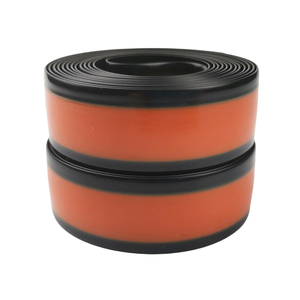
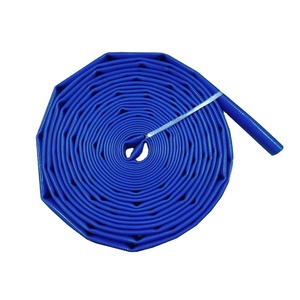
Durable High Tenacity Double Color TPU Webbing Strap Anti-Puncture Tire Liner Bicycle Inner Tube 26''

Durable High Tenacity Double Color TPU Webbing Strap & Anti-Puncture Liner 26''

Material: Co-Extruded Dual-Layer TPU
Application: Heavy Duty Anti-Puncture Protection
Get Catalog
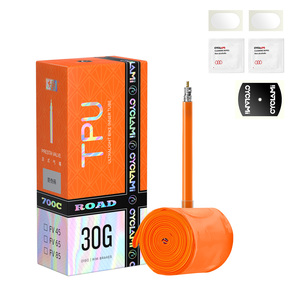
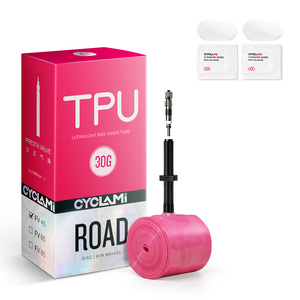
CYCLAMI Ultralight Bicycle Inner Tube TPU 30g Inner Tube 700C

CYCLAMI Ultralight 30g TPU Inner Tube 700C (45mm / 60mm / 80mm Valves)

Weight: ~30g Ultra-Low Mass
Compatibility: 700C x 18-32C Road Tyres
Get Catalog
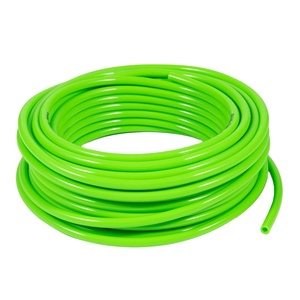
Polyurethane Tpu Tubing Ester Based Pur Tube Pu air Hose

Ester-Based PUR Polyurethane TPU Air Hose & Industrial Tubing

Structure: High-Grade Ester PUR
Properties: Oil, Abrasion & Pressure Resistant
Get Catalog
CYCLAMI 30g Road Bicycle TPU Inner Tube FV 45/65/85mm

CYCLAMI 30g Performance TPU Tube 700C FV (45mm/65mm/85mm Valve)

Valve Types: Reinforced Aluminum Presta
Feature: High Temperature Brake Rim Safe
Get Catalog
ZYfire Flexible TPU Rubber Well Riser Hose Pipe Plastic Tubes

ZYfire Heavy Duty Flexible TPU Well Riser Hose for Potable Water Transfer

Certification: NSF / Potable Water Safe
Tensile Strength: Ultra-High Riser Load Rating
Get Catalog
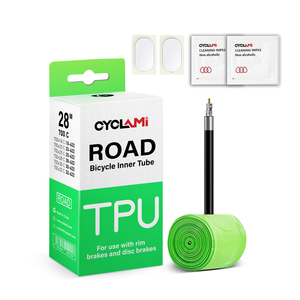
CYCLAMI 30g TPU Road Bike Inner Tube 700c Presta Valve

CYCLAMI Precision 30g TPU Inner Tube 700C (Width 18-32C Universal)

Aero Advantage: Ultra-Compact Packed Size
Sealing: Patented Laser-Welded Valve Base
Get Catalog
Pneumatic Polyurethane TPU Tube Hose for Air Compressor

Industrial Micro-Pneumatic 4mm-16mm TPU Fluid Hose Coil

Outer Diameter: 4mm to 16mm Options
Tolerance: High-Precision ±0.05mm Wall
Get Catalog
Flexible Transparent TPU Tube Coil High Elasticity Food Safety

High-Elasticity Transparent Medical & Food Safety TPU Coil Hose

Purity Grade: Medical & Food Contact Grade
Kink Resistance: Superior Memory Retention
Get Catalog
-75%
Rotating Weight vs. Butyl
200%
Puncture Strength Retention
0.15mm
Ultra-Thin Extrusion Limit
100%
Recyclable Polymer Matrix

The Paradigm Shift: Thermoplastic Polyurethane (TPU) vs. Legacy Vulcanized Polymers

Technical analysis on microstructural physics, rotational physics, and OEM manufacturing integration.

In the evolving landscape of advanced polymer manufacturing, legacy vulcanized elastomers—specifically Isobutylene-Isoprene Rubber (Butyl)—are experiencing a rapid phase-out across premium commercial and industrial verticals. As global original equipment manufacturers (OEMs) demand radical weight reduction, increased kinetic efficiency, and strict environmental compliance, Thermoplastic Polyurethane (TPU) ultralight tubing has emerged as the definitive material standard.

Key Information Gain Insight: Unlike cross-linked butyl rubber, which requires energy-intensive vulcanization and permanently locks polymer chains in an un-recyclable matrix, TPU utilizes linear block copolymers consisting of alternating hard crystalline segments and soft elastomeric segments. This distinct molecular geometry allows high-tensile elongation up to 450% without plastic deformation, while keeping wall thicknesses down to an unprecedented 0.15mm to 0.35mm.

For high-performance bicycle manufacturers, tire brand OEMs, and industrial fluid transmission system designers, switching from traditional rubber compounds to precision custom extruded TPU inner tubes delivers tangible engineering benefits:

  • Rotational Inertia Reduction: Decreasing mass at the outermost perimeter of a rotating assembly (such as a bicycle wheel system) yields a 1.7x exponential savings in dynamic acceleration torque compared to static frame weight reduction. A standard 700C butyl tube weighs approximately 100g to 120g; an OEM-grade ultralight TPU tube scales at a mere 23g to 38g, cutting rotational mass by up to 75%.
  • Superior Impermeability & Density: Despite possessing a wall thickness less than half that of standard butyl, high-density extruded TPU exhibits extremely low air-permeability coefficients, dramatically reducing pressure loss over extended operational cycles.
  • Snakebite & Pinch Resistance: The extreme tensile strength and puncture-propagation resistance of thermoplastic polyurethane prevent catastrophic pinch flats when impacted against severe rim contours or hard obstacles.
  • Volumetric Packaging Efficiency: TPU ultralight tubes collapse to less than 30% of the volume of equivalent butyl products. This compact footprint slashes international B2B shipping costs per unit, reduces packaging container volume, and allows end-consumers to carry multiple compact spares in minimal pocket space.

Engineering Comparison Matrix: OEM Polymer Material Options

Performance Metrics OEM Custom TPU (Polyether/Ester) Standard Butyl Rubber Latex Rubber Silicone Polymer
Average Wall Thickness 0.15 mm – 0.35 mm 0.80 mm – 0.90 mm 0.45 mm – 0.60 mm 0.60 mm – 1.00 mm
Weight (Standard 700C / 26") 23 g – 38 g 100 g – 135 g 65 g – 85 g 90 g – 110 g
Puncture & Tensile Resistance Extreme (2x vs Butyl) Baseline Reference Moderate / Tear Prone Low Abrasion Resistance
Air Retention (Impermeability) Excellent Very High Poor (Daily Inflation) Moderate
Recyclability & Sustainability 100% Thermoplastic Recyclable Non-Recyclable Thermoset Biodegradable / Non-Recycle Complex Chemical Recycling
Custom Color & Co-Extrusion Infinite (Transparent, Tinted, Dual) Black Only (Carbon Black) Natural Beige / Opaque Semi-Translucent Colors

Precision OEM Manufacturing & Quality Assurance Standards

How high-tech automated facilities ensure zero-defect tolerance across mass wholesale orders.

Automated Laser Extrusion

State-of-the-art multi-axis laser sensors continuously monitor wall uniformity in real time, guaranteeing micro-tolerances within ±0.01mm across multi-kilometer production runs.

Ultrasonic Thermal Fusion

Eliminating weak chemical glues, our patented ultrasonic welding technology fuses tube seams and valve bases at the molecular level to prevent pressure leaks and thermal separation under braking strain.

Dual Batch Identification

Following strict ISO/Austrian manufacturing quality standards, every finished tube is micro-printed with a 9-digit product item code and a 5-character batch code for full supply chain traceability.

Traceability & Quality Inspection Workflow

To uphold E-E-A-T reliability for our worldwide brand partners, every single manufactured batch undergoes a mandatory 24-hour inflation pressure hold test inside climate-controlled test chambers prior to final automated folding and packaging. If a pressure degradation exceeding 0.02 BAR is registered, the entire sub-batch is segregated and recycled. The printed batch code allows distributors to instantly audit material origin, resin melt flow index (MFI), and operator logs on demand.

Product Evolution & Future Procurement Trends (2026–2032)

Strategic forecast for OEM procurement officers, supply chain managers, and product directors.

1. Integration of Smart Pressure Telemetry (NFC/IoT)

As smart cycling ecosystems mature, OEM inner tubes are transitioning from passive air bladders into active telemetry nodes. Technologies such as TUBO-PSENS embed flexible, battery-free Near Field Communication (NFC) chips directly within the TPU wall adjacent to the valve base. Mechanics and riders tap a smartphone against the tire sidewall to instantly read internal pressure with zero air loss and no valve cap manipulation. Future B2B contracts will increasingly mandate smart-sensor readiness for mid-to-high-tier complete bike builds.

2. Bio-Based & Recycled Polyurethane Synthetics

Driven by stringent European Union Eco-Design directives and global corporate scope-3 emissions targets, OEM buyers are rapidly shifting from fossil-fuel derived resins toward plant-derived polyols (such as castor oil-derived bio-TPU). Furthermore, because TPU is fully thermoplastic, factory trimmed scraps and post-consumer returned tubes can be re-pelletized into non-critical industrial components or secondary inner tube ranges, establishing a circular closed-loop manufacturing lifecycle.

3. E-Mobility & Heavy Load Municipal Adaptations

The global explosion in electric cargo bikes (E-Cargo), urban delivery fleets, and high-torque E-MTBs has created demand for reinforced TPU blends. Standard ultralight tubes focus on minimal weight (23g-35g), whereas urban/cargo applications utilize heavy-duty architectures (such as X-TUBO technology) designed with thicker structural walls (150g-180g) that deliver up to 500% greater resistance against glass shards, metal debris, and high rim friction heat generated under heavy utility loads.

4. Cross-Industry Micro-Tubing Convergence

Technological advancements developed for ultralight bicycle inner tubes are cross-pollinating into medical devices, pneumatic automation, and potable water transport. OEM factories capable of co-extruding ester and ether-based TPU with custom shore hardness ratings (70A to 98A) are consolidating supply chains, offering brands a single certified source for high-purity, food-grade, kink-resistant custom tubing.

Frequently Asked Questions (B2B Procurement & Custom OEM FAQ)

Clear, authoritative guidance for international purchasing teams, brand managers, and product developers.

What are the primary structural differences between Ether-based and Ester-based TPU tubing?

Ester-based TPU delivers exceptional mechanical strength, superior abrasion resistance, and high resistance to oils and industrial chemicals, making it the preferred choice for pneumatic air hoses, industrial fluid coiling, and heavy-duty tire liners. Ether-based TPU, conversely, provides superior low-temperature flexibility, excellent hydrolysis (moisture) resistance, and high anti-microbial stability. For bicycle inner tube applications, ether-grade TPU is predominantly used to ensure long-term stability against humidity and air moisture condensation inside tire cavities.

What custom OEM/ODM parameters can be specified for wholesale tube manufacturing orders?

Our custom manufacturing program offers complete flexibility across multiple engineering parameters:
  • Wall Thickness: Custom ranges from 0.15mm (ultra-racing) up to 0.45mm (heavy utility).
  • Valve Stem Integration: Choice of high-grade lightweight aluminum alloy or brass stems in 45mm, 60mm, 80mm, or custom lengths, with removable or fixed Presta/Schrader cores.
  • Pigmentation & Aesthetics: Fully custom pantone colors, translucent clear finish, or high-visibility fluorescent hues.
  • Private Label Branding: Laser-etched stem branding, customized micro-printed logos on the TPU body, and fully tailored retail box or bulk OEM assembly packaging.

Are TPU inner tubes compatible with traditional rim brake systems and high braking heat?

Standard ultralight TPU inner tubes (such as 23g-25g models) are optimized specifically for disc-brake configurations where heat isn't generated directly at the wheel rim. However, for rim-brake complete bikes, specialized high-heat-resistant TPU formulations and reinforced rim-tape liners are mandated during OEM specification to withstand rim temperatures exceeding 180°C under continuous heavy descent braking.

How does puncture repair for TPU tubes differ from traditional butyl rubber?

TPU cannot be repaired using conventional vulcanizing rubber cement and rubber patches, as chemical vulcanization does not bond with thermoplastic polymers. TPU tubes require dedicated elastomeric adhesive patches or self-adhesive alcohol-cleaned TPU film patches that form an instantaneous mechanical seal over the puncture site.

What are the Minimum Order Quantities (MOQs) and lead times for custom OEM production?

For standard off-the-shelf TPU tubes (e.g., CYCLAMI standard 700C 30g variants), MOQs start at 500 units per specification. For fully customized private-label production (custom color co-extrusion, bespoke valve lengths, and branded packaging), standard factory MOQs typically start at 2,000 to 5,000 units. Standard production lead times range between 15 to 30 business days following initial sample approval and technical spec validation.

What regulatory and chemical compliance standards do your TPU factories adhere to?

All raw TPU resins and finished extruded tubing comply strictly with European REACH regulations, EU RoHS environmental directives, California Proposition 65, and NSF/FDA standards for food and medical grade fluid transfer lines. Certificates of Analysis (CoA) and Material Safety Data Sheets (MSDS) are provided with every export shipment.

Partner with a Premier Custom TPU Extrusion Manufacturer

Whether you are expanding a global aftermarket cycling brand, engineering next-generation E-Mobility platforms, or sourcing high-spec pneumatic TPU tubing for industrial automation, our engineering team provides complete OEM/ODM support from resin compounding to final packaged delivery.

Get Catalog