
Global Sourcing Report: Navigating the China Wholesale Road Tubes & TPU Ecosystem
The global pneumatic elastomer industry is undergoing a structural transition. As cycling brands, OEM wheel builders, and industrial pneumatic distributors strive to optimize weight, mechanical durability, and freight density, traditional vulcanized butyl rubber tubes are rapidly losing market share to advanced Thermoplastic Polyurethane (TPU) road tubes. China’s manufacturing cluster—combining raw material polymer synthesis, high-precision extrusion tooling, and automated laser seam welding—has emerged as the world's primary export hub for next-generation TPU road tubes and industrial polyurethane hoses.
This B2B sourcing intelligence report evaluates the key engineering benchmarks, manufacturing criteria, supply chain compliance standards, and future market trajectories governing commercial procurement from top-tier Chinese export facilities.
1. Material Engineering: Why TPU Outperforms Butyl Rubber
The architectural shift from butyl rubber (isobutylene-isoprene) to premium aromatic and aliphatic TPU polymers represents an exponential upgrade in performance characteristics. For global importers and B2B brand owners, understanding these polymer dynamics is crucial when specifying technical requirements for OEM contracts:
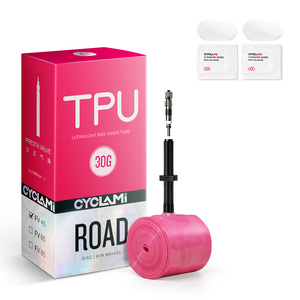
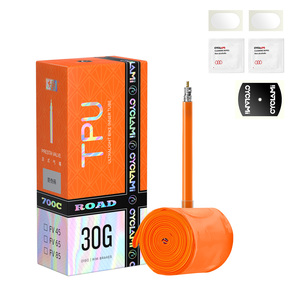
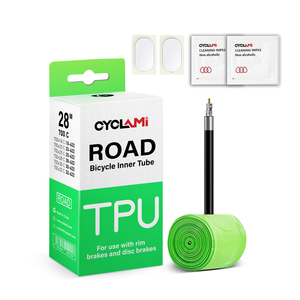
- Unrivaled Weight Reduction: A standard 700x25C butyl road inner tube weighs between 100g to 125g. In contrast, ultralight TPU road tubes engineered in Chinese export facilities weigh as little as 23g to 30g (such as the 30g CYCLAMI series), shedding up to 75% of peripheral rotating mass at the wheel rim.
- Superior Tensile Strength & Pinch-Flat Resistance: TPU possesses a tensile strength exceeding 45 MPa, more than double that of conventional vulcanized rubber. This high structural modulus protects against snakebite pinch-flats and sharp micro-punctures.
- Compact Logistics & Carbon Reduction: Uninflated TPU road tubes roll up into a fraction of the space required by butyl tubes. A single 40ft ocean container can hold up to 3.5 times more TPU tubes, drastically lowering per-unit freight charges and landed carbon footprint.
- Aging Stability & Chemical Resistance: Unlike butyl rubber which degrades when exposed to atmospheric ozone, UV light, or elevated temperatures over time, TPU exhibits exceptional hydrolytic stability, ozone resistance, and non-embrittlement longevity.
Performance Matrix: Material Comparison for B2B Purchasing Specs
| Performance Metric | Standard Butyl Tube | Lightweight TPU Tube | X-TUBO Reinforced Grade |
|---|---|---|---|
| Average Weight (700C Road) | 100g – 120g | 23g – 38g | 55g – 75g |
| Tensile Strength (MPa) | 12 – 15 MPa | 40 – 50 MPa | 55+ MPa |
| Puncture Resistance (N) | Baseline (1.0x) | 2.1x Baseline | 3.5x Baseline |
| Pack Volume Density | Large (100% Vol) | Ultra-Compact (~25% Vol) | Compact (~35% Vol) |
| Recyclability & Sustainability | Non-Recyclable (Thermoset) | 100% Recyclable (Thermoplastic) | 100% Recyclable (Thermoplastic) |
2. Advanced Manufacturing Processes in Chinese Tier-1 Export Facilities
Leading Chinese exporters have moved far beyond low-cost manual assembly lines. Top-tier suppliers in Guangdong, Zhejiang, and Jiangsu utilize state-of-the-art automated manufacturing processes engineered to meet stringent European standards (akin to Austrian high-end specs):
Precision Continuous Extrusion
Wall thickness consistency is paramount. Premium China road tube factories utilize closed-loop laser gauge sensors along the extrusion line to maintain tube wall tolerances down to ±0.01mm. This eliminates thin spots that cause sudden blowouts under high pressure (100+ PSI / 7+ Bar).
Automated High-Frequency Seam Welding
The seam of a TPU tube is historically its weakest link. Leading exporters employ automated high-frequency ultrasonic or laser bonding machines. This thermal fusion process merges the polymer chains at the overlap joint without introducing added weight or structural stress points, achieving seam strength identical to the parent material.
Patent Valve Integration & Heat-Resistant Stems
Valve stem joint failures account for significant return rates in lower-grade imports. Advanced factories employ double-injection molded TPU valve roots paired with ultra-light anodized aluminum or heat-treated brass cores. Optional Presta valve lengths (45mm, 60mm, 85mm) cater to modern deep-section carbon aero wheels.
3. Enterprise Strengths: Why Partner With Our Export Network
When sourcing road tubes and industrial polyurethane hoses from our certified China manufacturing hubs, global B2B clients benefit from an unmatched combination of technical rigor and commercial agility:
Rigorous Quality Control
Every single manufactured tube undergoes a mandatory 24-hour pneumatic air retention inflation test prior to packaging. Zero-defect tolerance policies guarantee high reliability upon arrival.
Full Batch Traceability
Following strict ISO 9001 practices, each tube is printed with a unique 9-digit product code and 5-character batch identifier. Importers can seamlessly trace raw material lots and production timestamps.
Complete OEM / ODM Flexibility
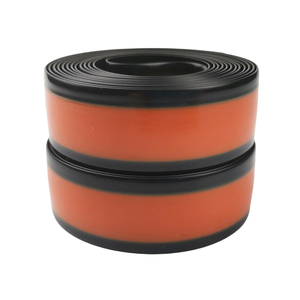
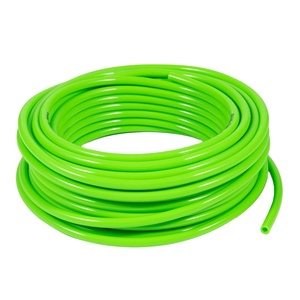
Custom packaging, bespoke colorways (signature orange, mint, transparent, high-visibility green), custom stem lengths, and private label branding are fully supported for low to high MOQs.
4. Future Sourcing & Technical Trends (2025–2030)
As the cycling industry and industrial automation sectors evolve, B2B purchasers must align with vendors who are pioneering tomorrow’s technologies:
Smart Sensor Integration (NFC & IoT TPU Tubes)
Emulating cutting-edge developments such as Tubolito’s TUBO-PSENS technology, Chinese export factories are developing integrated passive NFC pressure-sensing chips welded directly into the TPU tube wall. Mechanics and riders can read tire pressure wirelessly via a smartphone app without attaching a mechanical gauge or disturbing the Presta valve seal.
Circular Polyurethane Supply Chains
Environmental regulations across the EU (REACH, RoHS, EUPD) and North America are placing stricter demands on post-consumer waste. Unlike thermoset vulcanized rubber which ends up in landfills, TPU is a 100% recyclable thermoplastic material. Emerging factories are establishing closed-loop scrap recycling systems where production trimmings are re-pelletized for non-critical industrial applications.
Expansion into Heavy-Duty E-Cargo & Micro-Mobility
The rapid growth of urban e-bikes, cargo logistics bikes, and high-speed commuters demands inner tubes capable of handling heavy payload pressures and severe thermal loads from hub motors and disc brakes. Specialized high-density TPU formulations (such as reinforced X-TUBO grades) are setting new standards for commercial fleet uptime.