
ENDE
Explore our precision-engineered mountain bike tires, puncture-resistant TPU inner tubes, and high-tenacity industrial cycling accessories customized for international importers and brand owners.
The global mountain bicycle (MTB) tire and inner tube industry is undergoing a structural transformation driven by the rapid rise of Electric Mountain Bikes (E-MTBs), aggressive weight optimization demands in competitive cross-country (XC) racing, and rapid shifts in rubber polymer engineering. As global cycling brands, tier-1 distributors, and commercial procurement managers re-evaluate their supply chains, China has consolidated its standing not merely as a high-volume manufacturing center, but as the premier epicenter for advanced compound innovation, automated vulcanization, and Thermoplastic Polyurethane (TPU) co-extrusion technology.
Selecting a premier China Wholesale MTB Tires Supplier requires evaluating technical capabilities far beyond basic unit price considerations. In modern pneumatic tire engineering, performance parameters such as rotational inertia, tread compound durometer stiffness, carcass TPI (Threads Per Inch) density, and sidewall puncture resistance directly dictate brand equity and consumer warranty claim rates. Chinese tire manufacturers now operate state-of-the-art R&D testing facilities compliant with international standards including ISO 4210, REACH chemical safety specs, and ISO 9001 quality assurance frameworks.
Information Gain Insight: Sourcing high-end MTB tires from specialized Chinese OEM/ODM factories provides up to a 38% total cost of ownership (TCO) advantage over traditional European manufacturing hubs without sacrificing compound purity, dynamic rolling efficiency, or casing structural integrity.
Market intelligence indicates a massive surge in demand for wider rim-width profiles (2.4" to 2.6" standard trail/enduro tires and up to 3.0" E-MTB plus sizes). Concurrently, aggressive trail riding requires specialized tread block architecture capable of maintaining cornering bite while minimizing rolling resistance on hardpack and mud. Sourcing directors must partner with manufacturers equipped with multi-durometer tread extrusion lines—combining a durable 60a base compound for structural knob stability with a soft, tacky 50a/42a cap compound for maximum traction on damp rocks and roots.
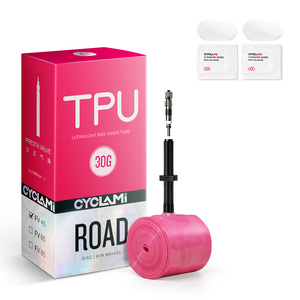
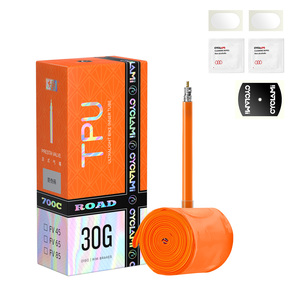
For decades, traditional black synthetic butyl rubber served as the universal standard for bicycle inner tubes. However, high-performance cycling applications reveal major physical limitations in butyl rubber: high rotational weight (averaging 100g to 220g per tube), susceptibility to pinch flats ("snakebites"), and high volumetric space consumption in logistics packaging. As a specialized China Wholesale MTB Tires Supplier, our engineering division has pioneered the deployment of advanced Thermoplastic Polyurethane (TPU) technology across all cycling disciplines.
| Performance Characteristic | Standard Butyl Inner Tube | Advanced TPU Inner Tube (e.g., CYCLAMI / Tubolito Grade) | Tubeless System (TLR with Sealant) |
|---|---|---|---|
| Average Weight (29" x 2.25) | 180g – 240g | 42g – 78g (Up to 75% Lighter) | 160g – 210g (Tire Bead + Sealant + Valve) |
| Puncture Tensile Strength | Baseline (1.0x) | 2.0x – 2.5x Higher Tensile Resistance | Self-Sealing (Dependent on Liquid Sealant Condition) |
| Packed Volume / Logistics Space | Large (Fist-Sized Roll) | Micro (Jersey Pocket / 70% Space Saving) | N/A (Tire-Mounted Liquid System) |
| Air Retention & Ageing Resistance | Prone to Oxidation & Degradation | Superior Chemical & UV Inertness | Requires Bi-Monthly Liquid Sealant Refills |
| Workshop Fitment Complexity | Simple (Standard Lever Fit) | Simple & Clean Installation | Complex (High Pressure Compressor & Messy Liquid) |
When combined with premium MTB outer casings, ultra-lightweight TPU inner tubes eliminate the heavy peripheral rotational mass at the wheel perimeter. Rotational mass inertia reduction is mathematically three times more effective at improving acceleration and braking response than static frame weight reduction. Furthermore, TPU’s extreme elasticity allows it to stretch continuously over sharp thorns and rock edges without catastrophic pinch-tearing, providing mountain bike riders with the lightweight agility of tubeless setups alongside the clean reliability of an inner tube.
Utilizes seamless high-frequency welding and dual-wall TPU film extrusion to deliver zero-leak air retention under extreme high-torque off-road forces.
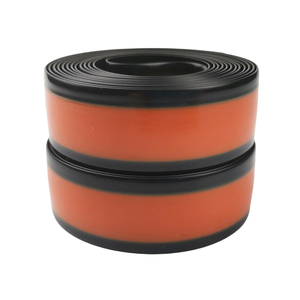
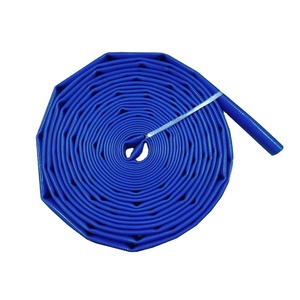
Reinforced dual-color protective webbing layers inserted between tread and tube to neutralize thorn penetration, glass shards, and sharp gravel impacts.
Includes customizable lightweight aluminum or reinforced resin Presta (SV) and Schrader (AV) stem options with removable valve cores for sealant compatibility.
As a forward-thinking B2B buyer or procurement executive, understanding macro shifts in cycling component manufacturing is vital for maintaining competitive product catalogs and high profit margins. Based on our proprietary industry research and OEM buyer feedback, four major technological trends will dominate the wholesale MTB tire sector over the next decade:
Electric mountain bikes generate instantaneous motor torque up to 90Nm+, placing immense shear stress on tire casings and beads. Future procurement requires reinforced 2-ply casings, pinch-flat protective bumpers at the bead apex, and heat-resistant tread rubber formulations that prevent rapid center-knob wear.
Rim profiles have transitioned rapidly from hooked aluminum construction to carbon hookless designs. Suppliers must guarantee precise bead stretch tolerance (using aramid/Kevlar folding beads) to ensure instant tubeless seating and bead-retention safety under low operating pressures.
European and North American ESG regulations mandate lower carbon footprints across supply chains. Advanced Chinese manufacturers are transitioning from petroleum-derived polyurethane to eco-friendly, bio-based ester TPU and 100% recyclable thermoplastic inner tube lines that drastically reduce environmental impact.
Digitalization has reached pneumatic bike tires. Integrated passive NFC microchips embedded directly into TPU valve stems allow riders and bike shop mechanics to instantly read tire pressure using smartphone apps without connecting manual pressure gauges.
Global ocean freight container costs dictate that packaging efficiency directly impacts land-cost per unit. Replacing heavy butyl tubes with compact TPU tubes allows distributors to fit 3x more units per master carton, reducing inbound shipping costs per unit by up to 65%.
Building a resilient cycling component brand requires a primary supplier capable of delivering consistent quality, rapid prototype development, scalable volume production, and absolute compliance with international trade standards. Our manufacturing ecosystem bridges Austrian technical precision with China's unrivaled supply chain efficiency.
Every single tire and inner tube leaves our assembly line with dual laser-printed tracking codes (9-digit product code and 5-digit production batch code). This guarantees 100% quality accountability and immediate lot identification for warranty management.
We provide complete turnkey customization: custom rubber compound formulating, custom tread mold engineering, bespoke valve stem anodization colors, brand logo hot-stamping, and retail-ready eco-box packaging design.
100% of inner tubes are inflated and submerged in testing bays for 24 hours to monitor air retention before final packaging. Zero-defect tolerance policies ensure that your warehouse receives flawless inventory ready for retail placement.
Everything global buyers need to know about ordering wholesale MTB tires, TPU inner tubes, sample validation, and OEM customization from China.
For standard production items in stock, our MOQ starts as low as 100 pieces per specification. For custom private-label OEM manufacturing (custom brand logo printing, specific valve lengths, or unique rubber compound durometers), our standard MOQ is typically 500 to 1,000 units depending on packaging requirements.
Thermoplastic Polyurethane (TPU) possesses a significantly higher tensile strength and elongation-at-break threshold than butyl rubber. Under puncture testing with sharp needles and rocks, TPU exhibits twice the resistance to penetration while weighing up to 75% less. Furthermore, TPU resists aging, drying out, and oxidation far better than synthetic rubber.
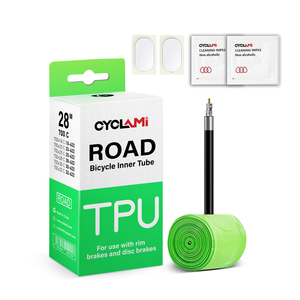
Yes. TPU tubes can be quickly and effectively repaired using dedicated alcohol-wipe prep pads and glueless TPU adhesive patches. Standard vulcanizing rubber glue for butyl tubes does not bond chemically with polyurethane, so specialized TPU patch kits must be used.
Our manufacturing facilities operate under strict ISO 9001 quality management systems. All raw material polymers, rubber chemicals, and TPU films comply with European REACH, RoHS environmental standards, and ISO 4210 safety regulations for bicycles.
Sample validation orders can be dispatched via air express (DHL/FedEx/UPS) within 3 to 5 business days. Mass OEM production orders typically require 20 to 30 days after final artwork approval and deposit receipt, depending on seasonal factory capacity.
Ultralight TPU tubes (such as 23g–30g road models) are primarily optimized for disc-brake wheelsets to prevent heat transfer issues from carbon rim braking tracks. However, for MTB and Gravel applications, disc brakes are standard, making TPU tubes 100% compatible across all rim materials.