
ENDE
Explore China’s top manufacturing lineup engineered for sports cycling, pneumatic automation, industrial fluid transfer, and high-pressure conveyance.
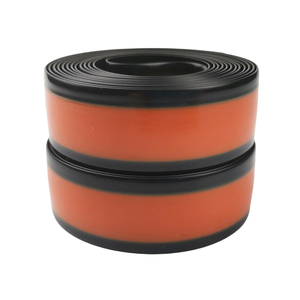
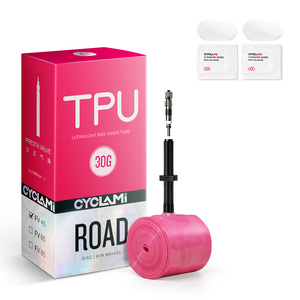
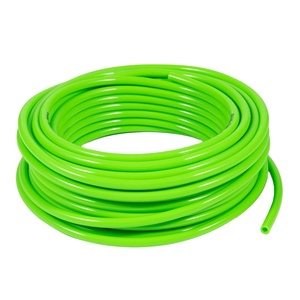
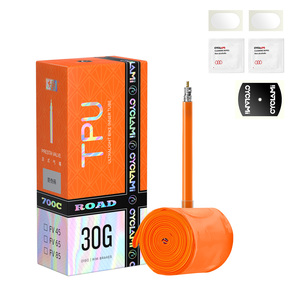
Why modern global procurement is pivoting away from vulcanized synthetic rubber toward extruded Thermoplastic Polyurethane elastomers.
For over seven decades, vulcanized synthetic butyl rubber (isobutylene-isoprene) served as the primary material for bicycle inner tubes, pneumatic hoses, and flexible fluid transfer conduits. However, traditional butyl suffers from inherent material constraints: high density (~1.2 g/cm³), thick wall requirements (0.7mm–0.9mm to maintain pneumatic seal), high viscoelastic damping (which converts kinetic energy into heat), and vulnerability to degradation over time.
Leading Chinese lightweight tube manufacturers have transformed this sector by deploying advanced Thermoplastic Polyurethane (TPU) extrusion technology. TPU is a block copolymer consisting of alternating hard segments (isocyanates) and soft segments (polyols). This dual-phase structure provides an unprecedented combination of high tensile strength (up to 45–65 MPa), extraordinary elongation at break (>450%), and supreme puncture resistance even at ultra-thin wall profiles down to 0.15mm.
| Performance Metric | Standard Butyl Rubber | Lightweight Latex | Engineered TPU (China Factory Spec) |
|---|---|---|---|
| Average Wall Thickness | 0.80 mm – 0.90 mm | 0.60 mm | 0.15 mm – 0.30 mm |
| Unit Mass (700C Road Spec) | 110g – 130g | 75g – 85g | 23g – 36g |
| Puncture Energy Absorption | Baseline (1.0x) | 1.2x Baseline | 2.1x – 2.5x Baseline |
| Pneumatic Air Retention (24h) | High | Very Low (Daily Pump Needed) | Ultra High (3x Density Seal) |
| Packed Volume Reduction | 100% (Bulky Standard) | 80% Volume | 25% Volume (Pocket Sized) |
| Recyclability & Eco Profile | Thermoset (Non-Recyclable) | Biodegradable | 100% Thermoplastic Recyclable |
In competitive cycling and high-speed robotic pneumatic actuation, mechanical energy loss is heavily influenced by hysteresis—the energy dissipated during cyclic flexing. Standard thick butyl tubes create considerable friction between the internal carcass of the tire and the tube surface, wasting 3 to 6 Watts of power per wheelset at cruising speeds.
By shifting to engineered ultra-lightweight TPU tubes, the reduced wall thickness diminishes internal friction. Furthermore, removing rotational mass from the outermost perimeter of the wheel drastically lowers the moment of inertia. B2B clients sourcing from top OEM factories in China can offer end customers instant rotational responsiveness, swifter acceleration climbs, and measurable watt savings without sacrificing air pressure retention.
Combining Austrian-inspired precision engineering standards with China's unmatched manufacturing scalability, supply chain integration, and rigorous quality control systems.
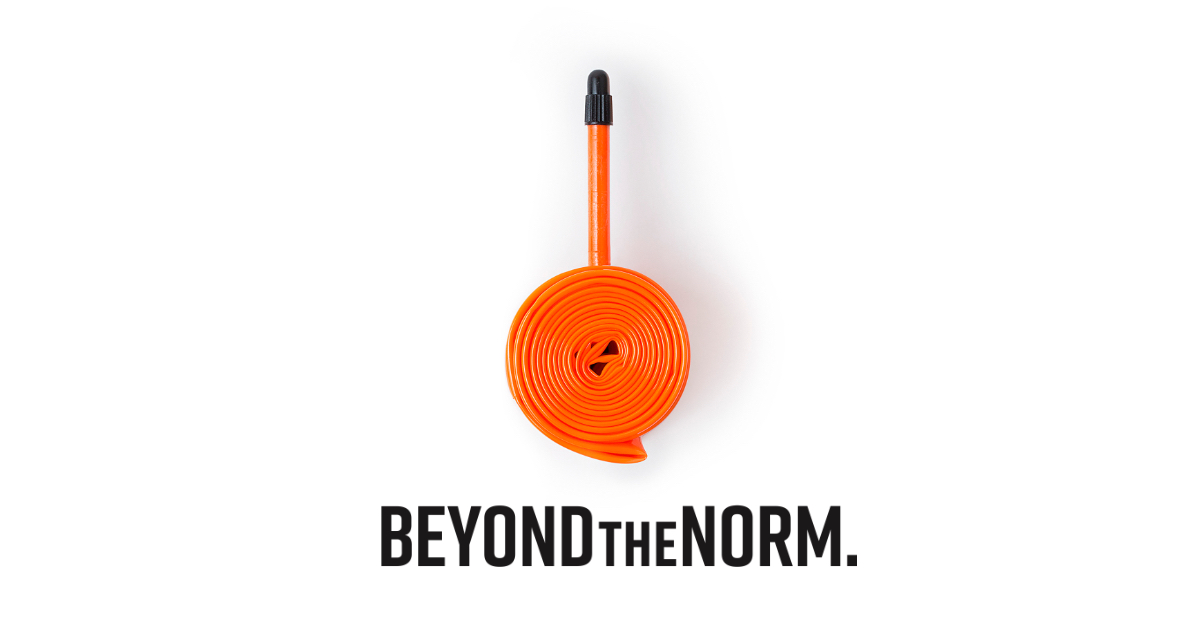
World-class manufacturing relies on absolute consistency. Our manufacturing facilities implement a rigorous 100% automated inspection protocol for every production run:

State-of-the-art continuous co-extrusion technology enables stable tube wall production down to 0.15mm, creating tubes as light as 23 grams for professional road racing applications.

High-frequency ultrasonic welding joints eliminate weak points at the seam and valve base interface, yielding twice the puncture energy resistance of traditional vulcanized rubber seams.

TPU tubes fold down to 25% of the physical volume of butyl tubes. OEM buyers benefit from 75% reduced freight costs, lower warehouse storage overheads, and sleek retail packaging.
Anticipating market demand shifts, eco-compliance mandates, and technical innovations shaping global wholesale and OEM procurement.
The convergence of mobile connectivity and cycling hardware has driven demand for smart tubing solutions. Next-generation TPU tubes feature embedded passive NFC micro-chips near the valve stem (such as TUBO-PSENS technology). Procurement officers must prepare for growing demand from premium bicycle brands seeking real-time smartphone pressure diagnostics without adding battery weight.
Global environmental regulations, including EU ESG mandates and Scope 3 emissions reporting, are compelling brands to transition from fossil-derived polyurethane to bio-based TPU formulations synthesized from renewable castor oil feedstocks. Modern Chinese suppliers are leading the market with 100% recyclable thermoplastic inner tubes that reduce lifetime carbon footprints by up to 60%.
The rapid growth of Electric Bikes (E-bikes) and Urban E-Cargo fleets has created a urgent need for lightweight yet high-load puncture resistant tubes. Future procurement strategies emphasize heavy-duty reinforced TPU variants (e.g., X-TUBO line) capable of handling higher wheel torque, elevated system mass, and rigorous daily commercial utility.
How cutting-edge material synthesis and custom valving tech are pushing the performance envelope.
Historically, one of the challenges of TPU inner tubes was valve-stem bonding stability and heat dissipation on rim-brake setups. Modern Chinese manufacturing innovation has solved this through multi-layer co-extrusion and high-grade aluminum/polymeric hybrid valve stems:
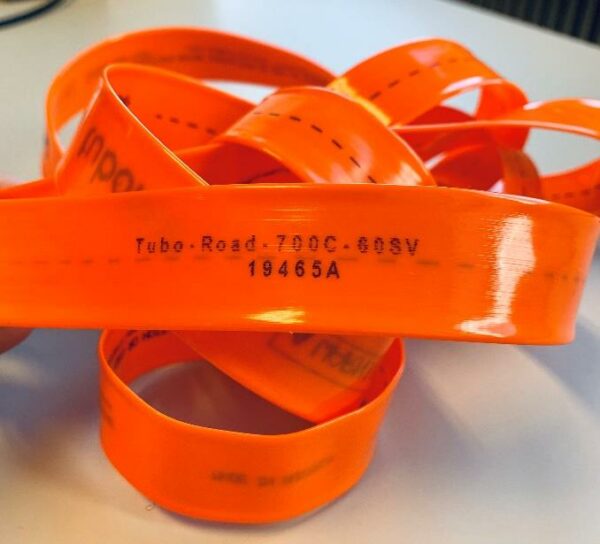
To support B2B distributor warranties, international brand protection, and rapid quality feedback, every tube produced by top Chinese factories incorporates laser-etched tracking identification.
Product codes specify exact dimensional parameters (e.g., 907111206 for 700C 18-32C Presta), while batch codes verify raw material lot origin, extrusion line number, and shift supervisor details.
Send an Inquiry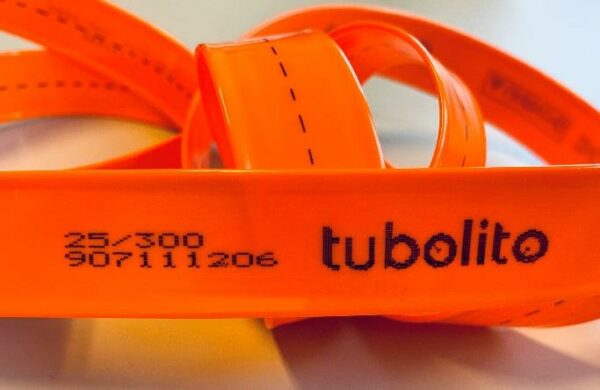
Everything procurement managers, OEM brand owners, and wholesale distributors need to know about custom sourcing, MOQs, testing, and shipping.
Elevate your product line with premium TPU bicycle inner tubes, high-pressure polyurethane pneumatic hoses, and custom extrusion solutions engineered to international standards.