
ENDE
Directly sourced from premier Chinese manufacturing lines. Engineered with medical-grade ester/ether TPUs, high-tensile reinforcement, and ultrasonic seamless bonding.
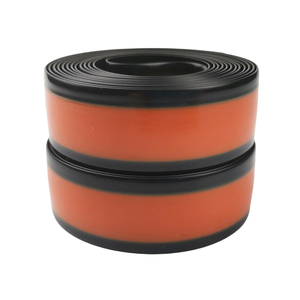
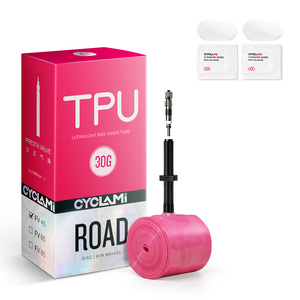
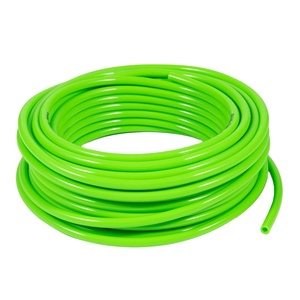
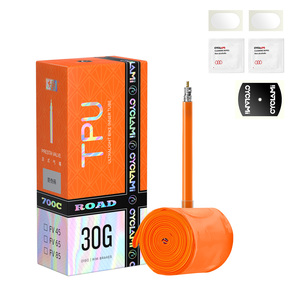
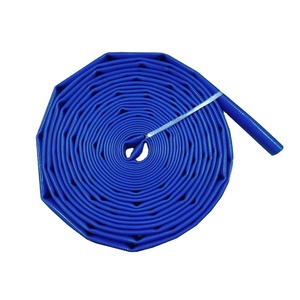
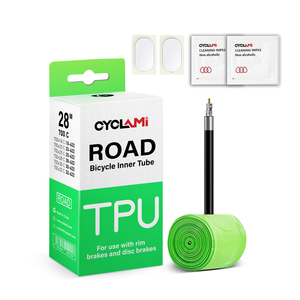
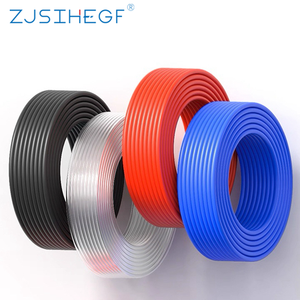
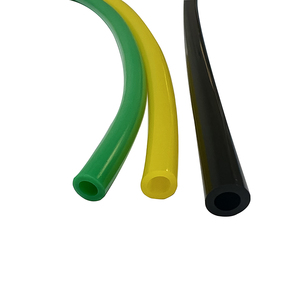
Through continuous extrusion innovation, Chinese OEMs have elevated Thermoplastic Polyurethane (TPU) performance far past traditional vulcanized butyl rubber standards.
vs. standard 100g butyl rubber tubes (23g–30g ultra-light standard)
Superior puncture & snakebite resistance per micron wall thickness
Ultra-compact packing footprint drastically lowers B2B freight costs
Zero-vulcanization thermomechanical melt processing aligned with ESG
The global polymer tubing and pneumatic fluid-transfer market is undergoing a fundamental structural transition. For decades, synthetic vulcanized rubbers—principally Isobutylene-isoprene (butyl rubber)—dominated both cycling inner tube manufacturing and flexible industrial fluid hoses. However, butyl rubber suffers from intrinsic physical bottlenecks: high density (~0.92 g/cm³), low tear propagation resistance when thinned below 0.7mm, and an energy-intensive vulcanization process that renders it non-recyclable.
Leading Chinese compact tube factories have spearheaded the industrial scaling of Thermoplastic Elastomer (TPE) and Thermoplastic Polyurethane (TPU) extrusion. By utilizing specialized linear block copolymers comprising alternating hard segments (isocyanate and chain extenders) and soft segments (polyether or polyester polyols), Chinese suppliers produce tubes with wall thicknesses down to 0.15mm without sacrificing structural integrity or gas barrier performance.
TPU compact tubes boast an elongation at break exceeding 450% to 600%. Unlike rubber which undergoes permanent plastic deformation under high shear strain, TPU retains mechanical memory, resisting pinch-flats, snakebites, and sharp impulse punctures.
Through co-extrusion technology, multi-layered TPU formulations limit oxygen and nitrogen migration. Air loss rates are comparable to heavy butyl, while delivering a weight payload reduction of up to 75% per wheel unit.
Objective laboratory parameter comparison for procurement managers evaluating performance-to-cost ratios.
| Performance Metric | Extruded TPU Compact Tube | Traditional Vulcanized Butyl | Natural Latex Tube |
|---|---|---|---|
| Density / Specific Gravity | 1.12 – 1.18 g/cm³ (ultra-thin wall) | 0.92 – 0.95 g/cm³ (thick wall required) | 0.94 g/cm³ |
| Typical Weight (700C Road) | 23g – 38g | 100g – 130g | 65g – 85g |
| Tensile Strength (MPa) | 35 – 55 MPa | 8 – 12 MPa | 20 – 30 MPa |
| Puncture Energy Resistance | 200% Higher than Butyl | Baseline Reference | Moderate (Prone to pinch flats) |
| Air Retention (24h Pressure Drop) | Very Low (<3%) | Low (<2%) | High (>15-20%) |
| Thermal Stability & Rim Heat | Excellent for Disc; Specific Rim-Brake Approved Grades | High Heat Resistance | Degrades rapidly at high temp |
| Eco-Recyclability & Circularity | 100% Thermoplastic Recyclable | Non-recyclable crosslinked waste | Biodegradable (Short shelf-life) |
Overseas buyers, brand owners, and industrial distributors must adapt their sourcing strategies to keep pace with rapid developments in supply chain intelligence, environmental legislation, and product integration:
With the European Union's Carbon Border Adjustment Mechanism (CBAM) and strict Scope 3 emission reporting, global OEMs are shifting to Chinese manufacturers that utilize renewable energy in TPU resin polymerization and zero-emissions extrusion processing.
Next-generation compact tubes are integrating passive NFC chips and wireless pressure-sensing transponders directly into the TPU valve stem junction (e.g., PSENS technology). This allows mobile tire pressure tracking without manual pressure gauges.
B2B buyers no longer accept one-size-fits-all sizes. Demand is surging for custom wall-thickness gradients, dual-color webbing straps, bio-compatible ester formulations for food/medical pneumatic lines, and tailored Presta/Schrader valve lengths (45mm to 85mm).
How advanced materials engineering in Chinese tier-1 facilities is solving historical limitations of polyurethane tubing.
Chinese polymer laboratories are replacing petroleum polyols with bio-based monomers derived from plant oils. Bio-TPUs achieve equivalent tensile strength while reducing cradle-to-gate carbon intensity by up to 40%.
Eliminating solvent adhesives, modern automated lines deploy ultrasonic molecular fusion. This welds the tube joint and valve base seamlessly, guaranteeing zero structural weak points under high cyclic pressures.
Polyether-based TPU formulations are modified with carbodiimide hydrolysis stabilizers, protecting compact tubes from degradation when exposed to warm moisture, oil mist, or ambient ozone in industrial environments.
Innovations in multi-layer co-extrusion allow factories to sandwich gas-impermeable barrier layers between high-toughness TPU outer skins, optimizing air retention while preserving micro-wall thickness.
Combining rigorous Quality Assurance (QA), full batch traceability, and high-volume OEM scale.
Every production tube features laser-etched 9-digit product codes and production batch numbers. Distributors can instantly audit material origin, extrusion parameters, and quality inspection logs.
Prior to packaging, 100% of finished tubes undergo 24-hour inflation decay pressure testing in automated pneumatic carousels, ensuring zero defect arrivals at your warehouse.
From eco-friendly unbleached cardboard boxes to sealed foil pouch packs, factories offer complete private label branding, customized valve colors, and retail barcoding.
Direct technical answers addressing procurement, compatibility, compliance, and custom logistics.
Contact our engineering support team to request physical material samples, request customized OEM/ODM specification sheets, or receive wholesale tier pricing for high-tenacity compact tubes.