ENDE
Engineered in ISO-certified export facilities. Designed for maximum puncture resistance, extreme weight optimization, and zero rolling resistance loss.
The global gravel cycling movement has evolved from a niche discipline into a dominant growth engine for the international bicycle industry. As demanding riders transition across asphalt, hardpack dirt, loose gravel, and rugged singletrack, equipment demands have scaled exponentially. China’s premier bicycle tire factories and export conglomerates have responded by modernizing their production infrastructure, integrating advanced polymer science, high-precision vulcanization, and automated carcass weaving techniques.
Historically, global brand owners relied on complex multi-tiered supply chains across Southeast Asia and Europe. Today, leading Chinese manufacturers located in OEM hubs such as Shandong, Jiangsu, and Guangdong offer complete vertically integrated production. From synthetic silica compound mixing to 120 TPI casing extrusion, heat-cured bead formation, and ultra-lightweight Thermoplastic Polyurethane (TPU) inner liner integration, Chinese factories deliver superior quality-to-cost metrics that allow global importers to maximize gross profit margins without sacrificing structural integrity or safety compliance.
Key technical vectors shaping OEM specifications, consumer purchasing intent, and global distribution channels over the next decade.
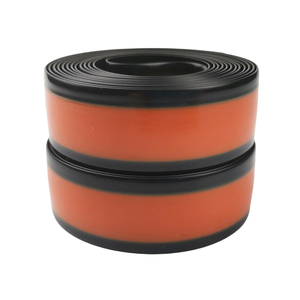
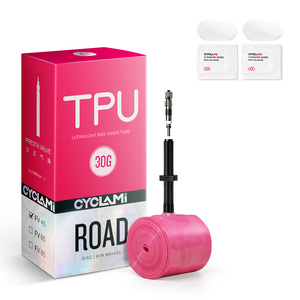
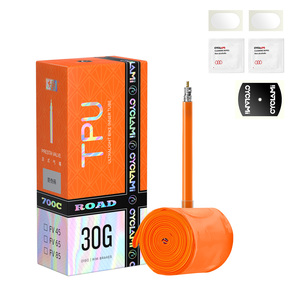
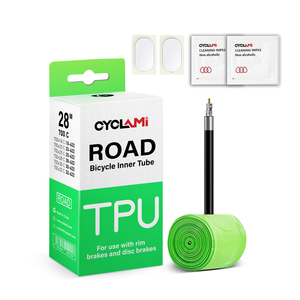
Traditional butyl tubes are rapidly being displaced by ultra-thin Thermoplastic Polyurethane (TPU) air retention bladders. Weighing under 30g to 45g, high-tenacity TPU materials yield up to a 70% weight saving at the wheel perimeter while delivering double the puncture resistance of conventional vulcanized rubber bladders.
Modern gravel wheelsets are shifting toward Tubeless-Ready Hookless (TSS) carbon and alloy rims. Leading Chinese export manufacturers utilize high-tensile aramid folding beads molded under strict ±0.2mm diameter tolerances to guarantee rim retention at low inflation pressures without blow-off risks.
To reduce rolling hysteresis while maintaining cornering grip on wet slate or loose soil, advanced factories formulate tread caps with dual-density rubber: a firm, low-rolling-resistance center strip (65A Shore durometer) combined with soft, high-tack shoulder lugs (52A Shore durometer).
B2B procurement orders increasingly mandate lightweight puncture belts layered directly underneath the tread block. Using high-modulus aromatic polyamide (Aramid) micro-weaves or high-density TPU films, tires achieve superior protection against thorns and sharp rocks with minimal weight penalties.
The consumer market demands suppleness to reduce rider fatigue. Chinese factories are replacing heavy 30–60 TPI nylon plies with fine-denier 120 TPI to 240 TPI multi-ply carcasses. This reduces structural deformation resistance, lowering Crr (coefficient of rolling resistance) while improving terrain compliance.
Leading OEM brands are embedding micro-NFC tags or heat-stamped matrix codes directly into tire sidewalls and TPU inner tube valve stems. This ensures complete supply chain traceability, authentication against counterfeit units, and real-time maintenance log tracking for fleet operations.
Quantitative comparison for product managers, procurement teams, and commercial brand developers.
| Performance Metric | Standard Butyl Inner Tube | High-Tenacity TPU Inner Tube | Tubeless Gravel (TLR Sealant) |
|---|---|---|---|
| Average Unit Weight (700x38C) | 120g – 150g | 30g – 45g | 60g – 90g (Liquid Sealant + Valve) |
| Tensile Strength (MPa) | 8 – 12 MPa | 35 – 55 MPa | N/A (Carcass Dependent) |
| Puncture Penetration Force | Baseline (1.0x) | 2.2x Baseline | Self-Sealing for <3mm punctures |
| Air Retention (Pressure Drop/Month) | ~15% PSI Loss | <5% PSI Loss | ~25% PSI Loss (Sealant Permeability) |
| Pack Size Volume | 100% (Standard Fist-Size) | 25% (Ultra-Compact Jersey Pocket) | Requires Repair Plug Kit |
| OEM Mold & Tooling Cost | Low Initial Tooling | Moderate Precision Tooling | High Precision Rim-Fit Tooling |
*Data derived from internal lab testing under ISO 4210-1 standard conditions (23°C, 50% RH, simulated 40C gravel load profile).
Successful private-label branding requires matching tread geometry with target market demographics. Our OEM manufacturing partners offer custom tread molds tailored to specific terrain archetypes:
Design: Diamond micro-knurls along center with low shoulder knobs.
Target Use: 70% Hardpack Gravel, 30% Tarmac. Lowest rolling resistance coefficient.
Design: Medium-height ramped center knobs with siped shoulder tread.
Target Use: 50% Dirt Trails, 50% Gravel. Maximum versatility across wet & dry conditions.
Design: Deep, widely spaced square lugs for effective mud shedding.
Target Use: Wet cyclocross, loose gravel, off-road singletrack adventures.
World-class manufacturing standards combined with complete OEM/ODM scalability.
Clear, authoritative answers to critical business and technical questions from international buyers.
For standard inventory products with custom branding or hot-stamped logos, our typical MOQ starts at 500 units per specification. For full OEM custom tread mold developments, the baseline MOQ is generally 2,000 units per tire size. TPU inner tube orders with custom valve lengths (45mm, 60mm, 85mm) or custom colorways carry a flexible MOQ starting from 1,000 units.
TPU inner tubes offer a compelling alternative to tubeless systems. While tubeless setups provide superior puncture self-sealing for small cuts, they require messy sealant refills, high maintenance, and specialized tubeless rim tape. TPU tubes weigh virtually the same as sealant volume alone (approx. 35g), provide exceptional puncture resistance, require zero liquid maintenance, retain air longer, and are far easier to install or replace roadside.
Yes. All high-tier export factories engineer gravel tires according to the latest ETRTO (European Tyre and Rim Technical Organisation) dimensions and ISO 4210 safety requirements. This ensures exact rim bead seated fitment on both traditional hooked rims and modern hookless (TSS) tubeless rims without risk of blow-off or improper seating.
Yes. TPU inner tubes cannot be repaired using traditional rubber vulcanizing glue because rubber cement does not chemically bond to thermoplastic polyurethane. Instead, dedicated elastomeric TPU repair patches with specialized pressure-sensitive adhesives (PSA) or solvent bonds are used. These patches provide an instant, permanent air seal without adding measurable weight.
Leading Chinese exporters provide comprehensive compliance documentation including EU REACH regulation compliance (verifying absence of polycyclic aromatic hydrocarbons/PAHs and restricted plasticizers), RoHS material safety reports, and ISO 9001 quality audit certificates required for smooth customs clearance in Europe, North America, and Australasia.
Prototype 3D-printed or lab-molded tire samples typically require 10 to 14 days. Once pre-production samples are approved, bulk production lead time ranges between 30 to 45 days depending on order complexity, custom packaging specifications, and factory production scheduling. Accelerated shipping channels are available for urgent product launches.
Partner with China's leading gravel tire and TPU component export factories. Request technical datasheets, factory audit reports, and competitive wholesale quotations.