
ENDE
In high-pressure pneumatic, automotive HVAC, refrigeration, and fluid control ecosystems, the humble Schrader valve serves as a critical mechanical interface. Selecting a certified manufacturer for CE Certified Schrader Valves is no longer merely a matter of component unit pricing; it represents a comprehensive risk-management strategy involving structural integrity under mechanical shock, resistance to corrosive media, and compliance with strict European Union health, safety, and environmental standards.
This technical whitepaper explores the material engineering parameters, pressure limits, compliance frameworks (including the Pressure Equipment Directive 2014/68/EU, ISO 9001:2015, and IATF 16949 automotive quality standards), and procurement trends governing Schrader valves today. Whether you require standard 8V1-32 thread tank valves, high-pressure HVAC access valves, custom nickel-plated brass fittings, or TPMS snap-in valve assemblies, this guide delivers empirical information gain to streamline your B2B supply chain.
Explore our specialized catalog of OEM-grade pneumatic tank valves, HVAC access fittings, precision valve cores, and TPMS components manufactured under ISO/CE quality protocols.
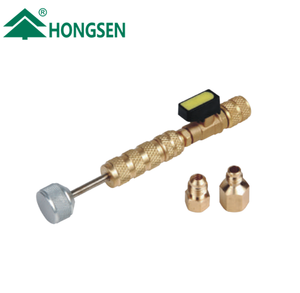
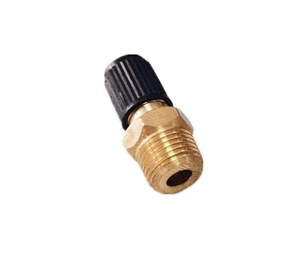
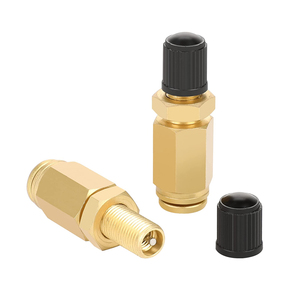
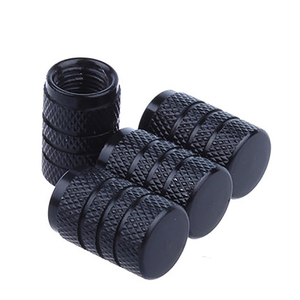
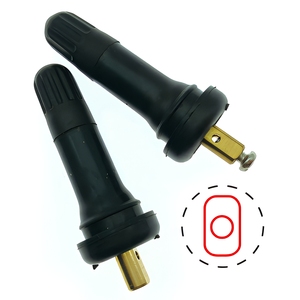
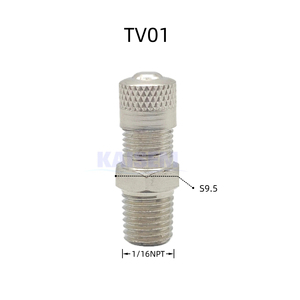
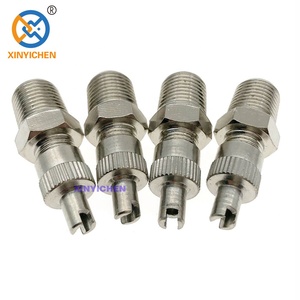
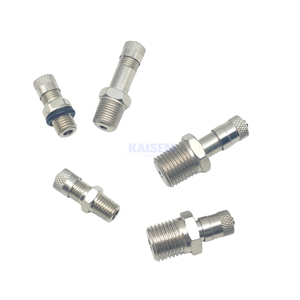
Rigorous quality control processes and automated CNC production capacity establish our leadership in international valve manufacturing.
Understanding the physics of high-pressure fluid retention and chemical compatibility in Schrader valve construction.
The selection of parent metal determines thread durability, corrosion resistance, and thermal expansion matching. Modern industrial Schrader valves rely predominantly on three metallurgies:
The elastomeric cup seal inside the Schrader valve core dictates working temperature and gas permeability. Incorrect elastomer specification leads to catastrophic system depressurization:
| Elastomer Type | Temperature Range | Compatible Media | Incompatible Media | Primary Application |
|---|---|---|---|---|
| Nitrile (NBR) | -30°C to +100°C | Compressed Air, Mineral Oils, Water | Brake Fluid (Glycol), Ozone, Ketones | Automotive Tires, Air Compressors |
| Fluoroelastomer (FKM / Viton®) | -20°C to +200°C | R-134a, R-410A, Synthetic Lubricants, Fuels | Low-Molecular Esters, Organic Acids | HVAC-R Access Valves, Fuel Rails |
| EPDM Rubber | -45°C to +150°C | Phosphate Esters, Steam, Brake Fluid | Petroleum Oils, Mineral Greases | Automotive Cooling & Brake Systems |
| HNBR (Hydrogenated Nitrile) | -40°C to +150°C | R-1234yf Refrigerants, Engine Oils | Strong Acids, Polar Solvents | Next-Gen Automotive Climate Control |
Strategic insights for procurement directors, OEM buyers, and system integrators navigating global market transitions.
Global environmental mandates (EU F-Gas Regulation and Kigali Amendment) are phasing out high-GWP refrigerants. Valve manufacturers are re-engineering valve core seals to handle ultra-low GWP refrigerants such as R-1234yf and R-290 (Propane), which demand explosion-proof anti-static brass forgings and high-temperature FKM compounds.
Tier-1 automotive and industrial buyers now demand 100% automated optical inspection (AOI) for thread pitch integrity and laser-engraved matrix codes on valve stems. Traceability allows batch tracking down to the specific brass rod heat number and vulcanization lot.
Traditional threaded NPT tank valves are increasingly replaced by hybrid PTC Schrader valves (as seen in product model TR02 / PTC 1/4"). These integrated designs eliminate extra threaded adapters, reduce assembly labor by up to 40%, and diminish leakage pathways in air suspension networks.
Combining certified manufacturing processes with robust OEM engineering capabilities to empower global distributors and original equipment manufacturers.
Our entire line of Schrader tank valves and refrigeration service valves meets European Pressure Equipment Directive (PED 2014/68/EU) standards, ensuring frictionless customs clearance across the EU.
State-of-the-art Swiss-type CNC automatic lathes maintain thread tolerances within ±0.005mm, guaranteeing precise engagement with standard 8V1-32 chucks and NPT fittings.
Every single HVAC and high-pressure tank valve is subjected to automated helium leak detection to guarantee micro-seal integrity under maximum working pressures.
From custom thread profiles (BSPT, Metric, NPT) to specialized nickel plating thicknesses and high-temperature Viton core installations, we supply tailored solutions for global brands.
Direct answers to technical, regulatory, and commercial questions regarding CE Certified Schrader Valves procurement.
CE certification under the Pressure Equipment Directive (PED 2014/68/EU) requires extensive hydrostatic pressure testing (typically 1.5x maximum allowable pressure), proof of raw material tensile strength via mill test certificates (EN 10204 3.1), helium leak rate verification, and thermal endurance cycling to confirm structural safety under operating stress.
The standard Schrader tire valve thread is designated as 8V1-32 (0.305" diameter, 32 threads per inch) according to ISO 4570. This thread is used at the top mouth of the valve stem where inflation chucks and caps attach. Conversely, 1/8" NPT and 1/4" NPT refer to National Pipe Tapered threads located at the base of tank fill valves, designed to create a pressure-tight seal when screwed into air reservoirs or manifold blocks.
Raw brass is vulnerable to tarnishing and galvanic corrosion when placed in contact with dissimilar metals (such as aluminum air tanks or carbon steel pressure vessels) in damp environments. Electro-nickel plating creates an inert barrier that resists oxidation, withstands 96+ hours of salt spray exposure (ASTM B117), and maintains smooth thread engagement without galling.
Standard Schrader valve cores require precise installation torque to avoid crushing the internal elastomer cup or leaving the seal loose. For standard automotive and HVAC cores, recommended installation torque is 3 to 5 in-lbs (0.34 to 0.56 Nm). Over-torquing damages the PTFE/FKM seal, causing micro-leaks, while under-torquing allows vibration-induced backing out.
Yes. Our TPMS snap-in rubber valve stems (such as model TR413/TR414 TPMS) are manufactured using high-grade EPDM rubber reinforced with brass core inserts. They are engineered and tested to withstand centrifugal acceleration forces exceeding 2,000 g at vehicle speeds up to 210 km/h (130 mph) while maintaining perfect rim hole seating.
Standard catalog items (such as 1/8" NPT tank valves) maintain a standard MOQ of 1,000 pieces with lead times of 10 to 15 business days. Custom OEM/ODM orders requiring specialized body geometry, pre-applied thread sealants (e.g., Loctite 503), or custom plating require an MOQ of 5,000 pieces with lead times of 25 to 30 days including tooling validation.