
ENDE
Explore our CE-compliant, European standard validated road cycling inner tubes, anti-puncture liners, and industrial pneumatic polyurethane assemblies engineered for ultra-low rolling resistance and high tenacity.
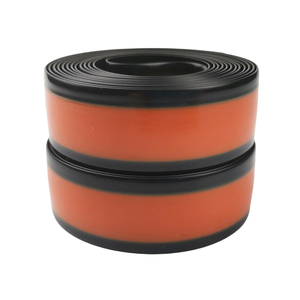
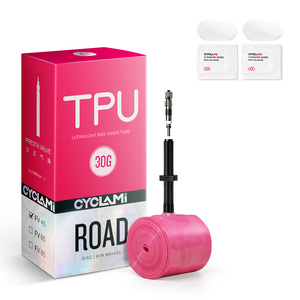
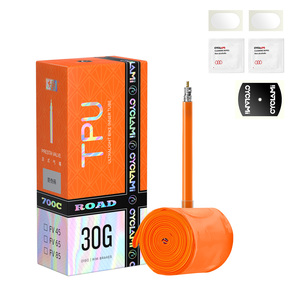
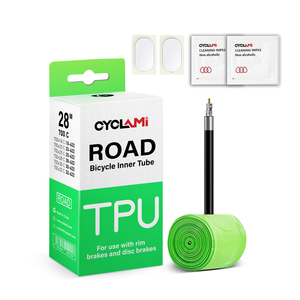
In modern commercial cycling fleets, high-performance OEM manufacturing, and global tire distribution networks, the demand for certified efficiency has reached an unprecedented peak. Traditional vulcanized butyl rubber inner tubes—which dominated the cycling market for nearly a century—are rapidly reaching their physics-imposed limitations regarding weight, rolling resistance ($C_{rr}$), and volumetric efficiency. As premier CE Certified Road Tires Manufacturers & Suppliers, our engineering facilities utilize advanced Thermoplastic Polyurethane (TPU) polymer matrices to redefine speed, reliability, and transport efficiency.
European CE certification (specifically evaluating safety under EN 14781 standards for racing bicycles and ISO 4210-2 requirements) demands stringent performance verification under extreme kinetic thermal stress, high-pressure inflation retention, and impact shear energy. This procurement guide provides procurement officers, commercial buyers, distributors, and bike brand developers with comprehensive engineering parameters, manufacturing insights, and compliance frameworks necessary to make informed bulk purchasing decisions.
The transition from conventional butyl rubber to high-tenacity TPU elastomer is rooted in chemical backbone engineering. Butyl rubber relies on dynamic cross-linked carbon chains that exhibit significant internal molecular friction (hysteresis loss) under cyclic deformation. Conversely, thermoplastic polyurethanes consist of linear segmented block copolymers comprising hard aromatic or aliphatic segments interspersed with soft polyether or polyester chains.
| Technical Property | Conventional Butyl Rubber | Latex Rubber | CE Certified TPU (Our Standard) |
|---|---|---|---|
| Average Weight (700C Road) | 100g – 130g | 75g – 85g | 23g – 30g |
| Tensile Strength (MPa) | 10 – 12 MPa | 25 – 30 MPa | 45 – 65 MPa |
| Puncture Resistance Index | 1.0 (Baseline) | 0.8 (Fragile) | 2.1 (Double Strength) |
| Air Retention (Pressure Drop/Week) | Low (~5-8%) | Extremely High (~50%) | Very Low (<4%) |
| Thermal Friction Limit (Disc Brake) | Up to 180°C | Fails at >100°C | Exceeds 220°C |
| Environmental Recyclability | Non-recyclable cross-linked scrap | Biodegradable (Short shelf-life) | 100% Thermoplastic Recyclable |
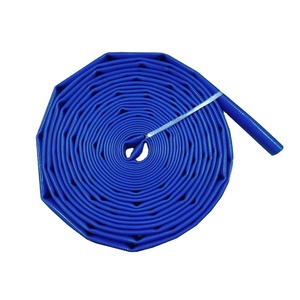
Utilizing high-frequency welded TPU webbing layers, our anti-puncture liners form an impenetrable thermal barrier between the tire carcass and inner tube, preventing thorn, glass, and snakebite pinches.
Removing 70 grams of static mass from the outermost radius of a 700C road wheel reduces dynamic moment of inertia exponentially, delivering blistering acceleration out of corners and effortless climbing dynamics.
Overcoming early industry failure points, our automated sonic-welding process integrates lightweight aluminum or reinforced plastic Presta valves seamlessly with zero interface structural weakening.
As global bike brands and Tier-1 automotive/transport procurement managers align with scope-3 carbon reduction targets and ESG mandates, tire and tube production technologies are undergoing significant industrial evolution. Procurement managers analyzing supply chain dynamics over the next decade must consider several key industry trends:
Cross-linked vulcanized rubber cannot be re-melted, creating massive landfill challenges globally. TPU polymers can be fully reground, pelletized, and extruded back into secondary production loops (such as industrial pneumatic hoses or protective webbing straps) without degrading core polymer mechanical strength. European supply chain mandates are rapidly tilting toward brands utilizing recyclable inner tube materials.
Traditional butyl tube manufacturing heavily relies on labor-intensive cold gluing processes, creating inherent variations in wall thickness and seam consistency. Modern TPU production utilizes fully automated CNC high-frequency thermal welding. This process fuses the extruded film edges at a molecular level, guaranteeing uniform wall density, zero seam leakage, and precise quality control.
The future of high-end road tires involves embedded smart diagnostics. Next-generation TPU road tubes integrate flexible, passive NFC chips (such as our proprietary PSENS technology) directly into the tube wall structure. Mechanics and riders can read tire pressure wirelessly with an NFC-enabled smartphone without valve interaction—providing enterprise fleet managers and rental bike operators real-time pressure monitoring.
To meet demanding CE certification criteria and maintain international brand authority, our manufacturing units implement rigorous ISO 9001:2015 quality control workflows. Every single road tube undergoes a 24-hour high-pressure inflation seal test prior to automated packaging.
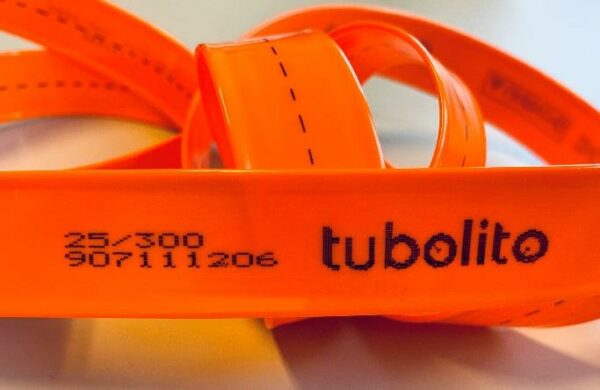
For large-scale enterprise distributors and OEM partners, accountability is paramount. Every product leaving our production facility features laser-ablated tracking codes printed directly on the TPU body:
Answers to common technical, logistics, and compliance questions from OEM buyers and international distributors.